How To Choose A Seasonal Pruning Plan For Common Garden Shrubs
A practical step-by-step guide to how to choose a seasonal pruning plan for common garden shrubs, including preparation, instructions, common issues, tips, and next steps.
How To Choose A Seasonal Pruning Plan For Common Garden Shrubs
Choosing a seasonal pruning plan for common garden shrubs keeps them healthy, well-shaped, and productive. This guide explains the timing and techniques for pruning different shrub types, with step-by-step instructions, safety warnings, troubleshooting, and advanced tips. You will learn how to assess your shrubs, choose the right tools, and prune at the correct time to encourage strong growth and abundant blooms.
Fast Answer
- Identify whether your shrub blooms on old wood or new wood to decide the best pruning window: spring bloomers prune after flowering, summer bloomers prune in late winter or early spring.
- Start with a simple plan: remove dead or damaged branches year-round, then shape lightly after bloom for spring-flowering shrubs, or in early spring for summer-flowering shrubs.
Before You Start
- Before pruning, inspect your shrubs for dead, diseased, or damaged branches; remove these immediately to prevent pest spread and improve airflow.
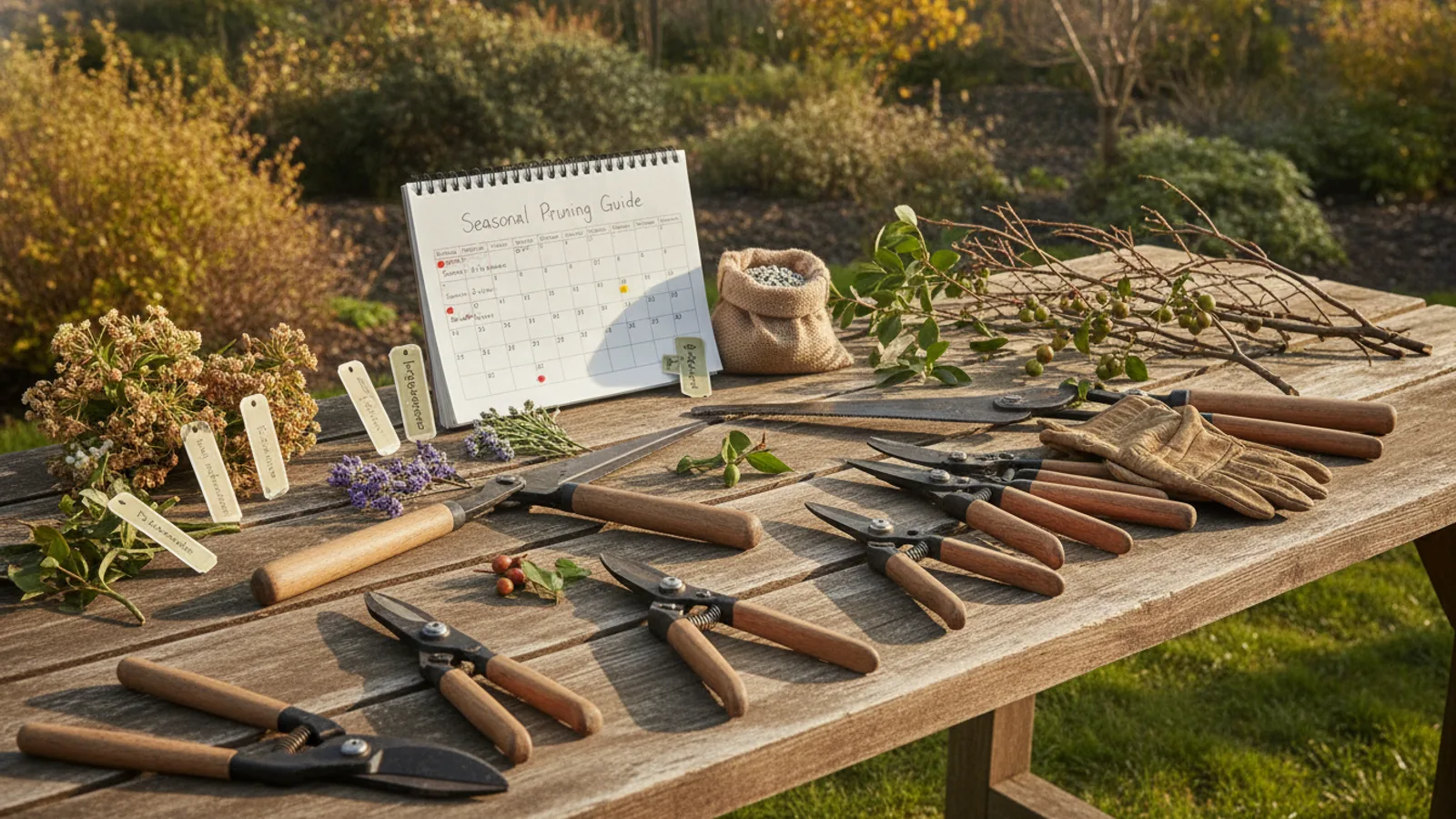
- Clean and sharpen your pruning tools with rubbing alcohol and a sharpening stone to ensure clean cuts that heal quickly and reduce disease risk.
- Wear thick gardening gloves, safety glasses, and long sleeves to protect yourself from thorns, sharp branches, and flying debris.
- Check the specific pruning recommendations for each shrub species you have, as some have unique timing needs (e.g., hydrangeas differ by type).
Step-by-Step Instructions
Identify Your Shrub Type and Bloom Time
First, determine whether your shrub flowers on old wood (growth from the previous season) or new wood (current season's growth). Spring-flowering shrubs like lilacs, forsythia, and azaleas set buds on old wood; pruning them in winter removes those buds. Summer-flowering shrubs like butterfly bush, spirea, and potentilla bloom on new wood; they can be pruned hard in late winter or early spring. For shrubs that bloom multiple times, deadhead regularly. If you're unsure, observe the shrub for one season: note when it flowers and whether new growth comes from old stems. You can also do a quick online search or ask a local nursery. This identification is the most critical step because it determines the entire timing of your pruning plan. Once you know your shrub's type, you can schedule the right pruning window and avoid cutting off future blooms.
Sanitize and Sharpen Your Pruning Tools
Before you make any cut, clean your pruning shears, loppers, and saw with a solution of one part bleach to nine parts water or rubbing alcohol. This prevents spreading diseases like fire blight from one branch to another. After disinfecting, sharpen the blades with a sharpening stone or file to ensure clean cuts. A sharp tool cuts smoothly without crushing stems, which helps wounds heal faster and reduces the risk of rot. Dull tools produce ragged cuts that invite pests and diseases. Also, oil the pivot point of the shears to keep the action smooth. If you are pruning several shrubs, disinfect the tools between each plant to avoid cross-contamination. This simple prep takes only a few minutes but greatly improves the health of your shrubs and makes your work easier and safer.
Remove Dead, Diseased, and Damaged Wood First
Begin pruning by removing any dead, diseased, or damaged branches. Dead wood is often brittle and lacks green tissue; scratch the bark with a thumbnail—if it's brown underneath, the branch is dead. Diseased wood may show discoloration, spots, or cankers. Damaged branches may be broken or split, and these can become entry points for pests. Cut dead branches back to the point of healthy tissue, or remove the entire branch if it's beyond saving. Make a clean cut just above a healthy bud or back to a main stem. Removing this wood improves airflow and light penetration, reducing fungal infections and creating a cleaner structure. This is a year-round maintenance step, but it's especially important at the beginning of a seasonal prune because it clears the way for shaping cuts and lets you see the shrub's true structure.
Shape and Thin for Airflow and Structure
After removing dead or damaged wood, step back and assess the overall shape of the shrub. Your goal is to create a balanced, open structure that allows light and air to reach the center. Start by removing any crossing or rubbing branches, as these can cause wounds. Then thin out dense growth by removing some older stems at the base, especially if the shrub is overgrown. Thinning encourages new growth and reduces the risk of mildew and pests. For spring bloomers, do this shaping after they finish flowering. For summer bloomers, do it in late winter or early spring before new growth begins. Make cuts at a 45-degree angle just above an outward-facing bud to promote outward growth and avoid strong upright shoots. Avoid shearing all stems to the same length, as this creates a dense outer shell that shades the interior.
Rejuvenate Overgrown Shrubs with Hard Pruning
If your shrub is severely overgrown, with many thick, woody stems and few blooms, a rejuvenation prune may be necessary. This involves cutting the entire shrub back to within 15 to 30 centimeters (6 to 12 inches) from the ground. This drastic method is best done while the shrub is dormant in late winter or early spring, and only for shrubs that tolerate heavy pruning, such as spirea, dogwood, and lilac. However, do not do this to all shrubs; some, like boxwood, may not respond well. Before you start, confirm that your shrub is a good candidate by checking its growth habit. After cutting, the shrub will look bare for the season but will send up vigorous new shoots. Apply a layer of mulch and keep the soil moist. This technique can revitalize old shrubs and improve flowering, but it is a major intervention, so use it sparingly.
Clean Up and Monitor After Pruning
Once you have finished pruning, collect all the cut branches and debris from around the shrub. Dispose of any diseased or infested branches in a sealed bag rather than adding them to your compost pile, because pathogens and pest eggs can survive compost and then spread. After cleanup, water the shrub thoroughly to help reduce stress and encourage new growth. Spread a layer of organic mulch around the base, keeping it a few centimeters away from the trunk to prevent rot. Monitor the shrub over the following weeks for any signs of stress, such as wilting or dieback, and check that new buds are forming as expected. For spring-flowering shrubs, note whether the remaining buds bloom on schedule. For summer-flowering shrubs, expect a flush of new growth within a few weeks. Adjust your next-year plan based on what you observe.
Quick Reference
| Situation | Action | Why it helps |
|---|---|---|
| You have a spring-flowering shrub like lilac or forsythia, and you want to prune without losing blooms. | Wait until the shrub has finished blooming in late spring, then immediately remove dead wood and lightly shape the plant by cutting back overgrown stems to a healthy bud. | Spring bloomers set their flower buds on old wood, so pruning after flowering gives them time to develop new buds for the next year during the summer. |
| You have a summer-flowering shrub like butterfly bush or spirea that has become woody and sparse. | In late winter or early spring, use hard pruning to cut all stems down to about 15–30 cm from the ground, just as new buds start to swell. | Hard pruning encourages vigorous new growth from the base, leading to a fuller shrub and more abundant blooms that appear on new wood. |
| You notice dead, diseased, or damaged branches on any shrub, regardless of the season. | Remove these branches immediately at any time of year, cutting back to healthy tissue or to the main stem with clean, disinfected tools. | Removing dead or diseased wood restores plant health, increases airflow, and prevents potential infections from spreading to the rest of the shrub. |
Common Issues
- You accidentally cut off all the flower buds because you pruned a spring-blooming shrub in winter.: Be patient; the shrub will survive but may not bloom this year. To avoid this next year, label your shrubs with their bloom time and use a pruning calendar to remind you of the correct season.
- Your shrub develops suckers or water sprouts after pruning, which seem to grow rapidly.: Suckers from the rootstock and water sprouts on branches should be removed promptly because they drain energy from the main plant. Cut them at the base or to the parent branch.
- Cut branches exhibit brown or black streaks inside, indicating a disease like canker or fire blight.: Prune at least 30 cm below the affected area, disinfect tools after every cut, and dispose of the infected material properly. Avoid pruning during wet weather to reduce spread.
Advanced Tips
- Learn the concept of 'basal renewal': instead of shearing the whole shrub, annually remove one-third of the oldest stems at ground level to keep the plant vigorous.
- Use a concave cutter for large branches to promote faster healing, as this cut leaves a slightly oval wound that closes more efficiently.
- Consider pruning for a specific design, such as creating an open-centered structure or a fountain-like shape, by selectively removing branches that disrupt the desired silhouette.
Final Checklist
- Identify the shrub's bloom type and mark the pruning date on your calendar.
- Clean and sharpen all pruning tools before making any cuts.
- Remove dead, diseased, and damaged wood first, then shape and thin.
- Water and mulch the shrub after pruning, and monitor for new growth.
FAQ
What happens if I prune at the wrong time?
Pruning at the wrong time can remove flower buds, reducing or eliminating blooms for the season. It may also stimulate new growth that is vulnerable to frost, causing dieback. However, most shrubs will recover after one season, and you can correct the timing next year.
Can I prune all shrubs in late winter?
No, that works only for summer-blooming shrubs that flower on new wood. Spring bloomers set buds on old wood and should be pruned right after flowering. Pruning them in late winter would remove the flower buds and result in few or no blooms.
How often should I prune my shrubs?
Most shrubs benefit from a light prune once a year, usually during the appropriate season. Some may need additional deadheading or removal of broken branches as needed. Avoid frequent heavy pruning, as it can stress the plant and reduce flowering.