How To Choose A Small Patio Planting Plan For Long Summer Colour
A practical step-by-step guide to how to choose a small patio planting plan for long summer colour, including preparation, instructions, common issues, tips, and next steps.
How To Choose A Small Patio Planting Plan For Long Summer Colour
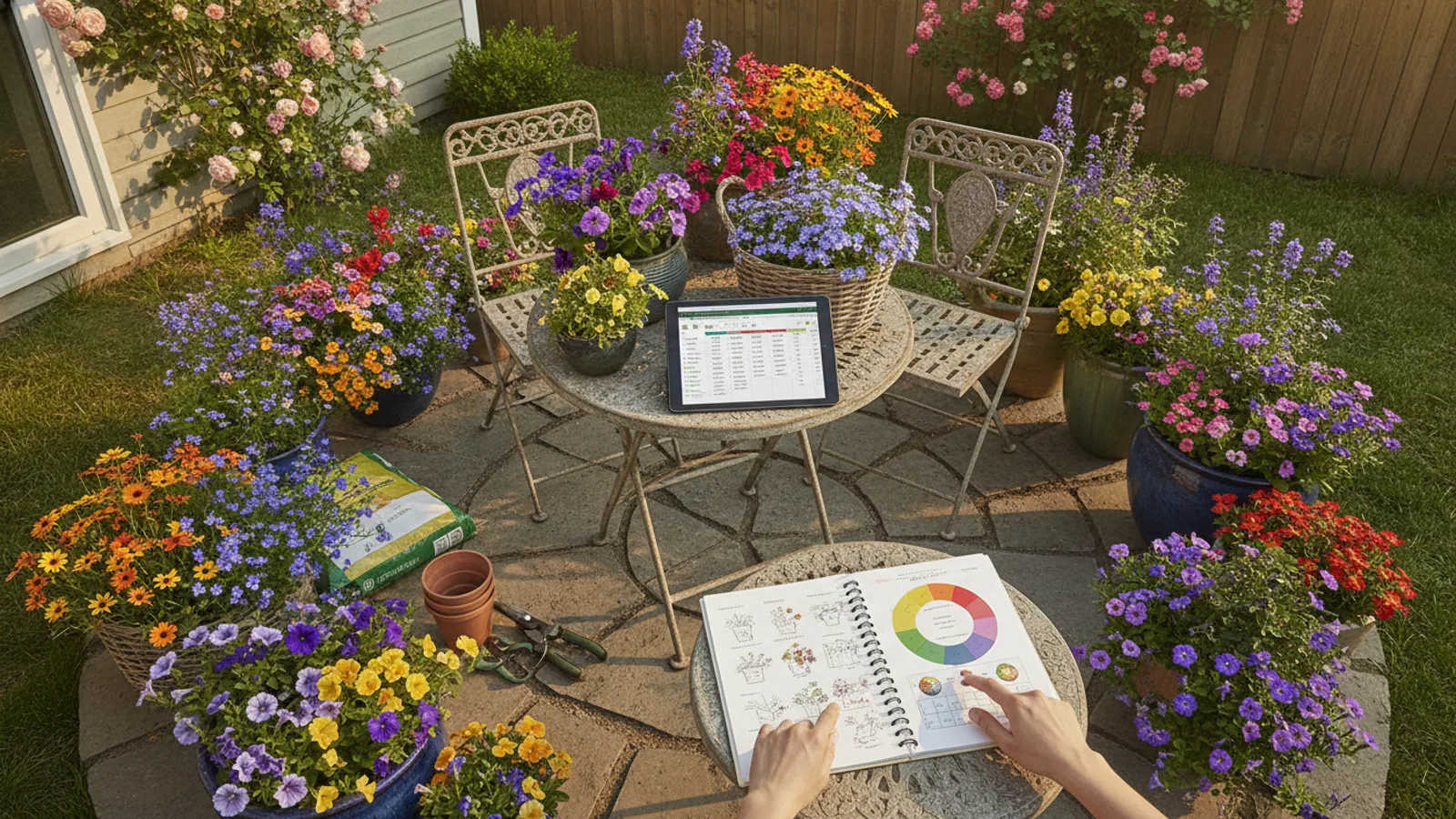
Choosing a small patio planting plan for long summer colour means picking a mix of plants that bloom at different times from early summer to early autumn, so your patio stays lively without constant replanting. This guide helps you assess your space, prepare containers and soil, select a balanced combination of annuals and perennials, arrange them well, and maintain them with watering, feeding, and deadheading. It covers common problems and gives advanced tips for even longer colour.
Fast Answer
- Start by measuring your patio and noting how much sun it gets, then pick three or four plants with different bloom times to cover the whole summer.
- Group plants with the same water and sun needs, use quality potting mix with slow-release feed, and deadhead spent blooms to encourage new ones.
Before You Start
- Measure your patio area and decide which spots get full sun, partial shade, or full shade - most sun-loving flowers need at least six hours of direct sun.
- Check your pots and planters for drainage holes, and clean them with soapy water to avoid diseases - you need containers that are big enough for mature roots.
- Buy or mix a quality potting mix that holds moisture but drains well; avoid garden soil, which can compact in pots and hold too much water.
- Gather your tools: hand trowel, watering can or hose with a gentle nozzle, slow-release fertilizer granules, water-soluble fertilizer, and sharp scissors for deadheading.
Step-by-Step Instructions
Assess Your Patio's Conditions
Before you buy anything, take a close look at your patio at different times of the day to see how much sun it actually gets. Most flowering plants need at least six hours of direct sunlight to bloom well, but some do better in part shade, especially in hot afternoons. Note if there are walls or fences that create hot spots or deep shade. Also think about wind - a very exposed patio can dry out pots quickly. Check how much space you have: a small patio might only fit a few pots, so you need to choose plants that will stay in scale. To make a long-season plan, you need a mix of early, mid, and late bloomers. For example, in a sunny spot, you might combine a summer-long bloomer like annual salvia with a late-blooming perennial like sedum. Write down the sun and space details so you can use them as a shopping guide. This step is the foundation; if you skip it, you'll end up with plants in the wrong spot, which is the most common reason patio colour fails.
Choose a Balanced Plant Selection
Now that you know your sun and space, pick a mix of plants that will give you colour from early summer to early autumn. A good rule is to choose three types: a 'backbone' plant that blooms all summer, like a compact geranium or annual verbena; a 'filler' that adds texture and fills gaps, like lobelia or dusty miller; and a 'thriller' that adds height and drama, like a small ornamental grass or a tall salvia. For each spot, also include at least one perennial that will come back next year, such as a coreopsis or a hardy daisy, because they often bloom for a long period. Check labels for bloom time and size; avoid plants that are too tall for your pots. Aim for a colour scheme - choose two or three colours that go well together, like blue and yellow, or pink and white. When you're at the nursery, look for plants with plenty of buds, not just open flowers, so they'll have more to give later. This balanced mix ensures that when one plant fades, another is starting, so your patio always looks colourful without bare gaps.
Prepare Your Containers and Soil
Good preparation prevents many problems later. Choose pots that are big enough for the plants you've selected - a pot that is too small will dry out quickly and restrict roots. Ensure each pot has at least one drainage hole; if not, drill one or use a pot with a liner. Clean the pots with a mild soap solution if they've been used before, then rinse well. Put a layer of crock (broken pot pieces) or fine mesh over the holes to stop soil from washing out, but don't cover the entire bottom with gravel as that can actually hold water and cause root rot. Fill the pot with a high-quality potting mix, leaving about an inch of space below the rim. Mix in slow-release fertilizer granules according to the package instructions - this will feed the plants for weeks. Water the mix lightly before planting so it's evenly moist but not soggy. This step matters because healthy roots need a balanced air-water mix; poorly drained or packed soil will suffocate roots and lead to poor growth and less flowering.
Plant Your Container with a Cohesive Design
Arrange your plants in the pots before you actually plant them. Place the 'thriller' in the centre or back, the 'filler' around it, and the 'spiller' at the edges so it can trail over the side. If your pot only faces one direction, put the thriller near the back and spillers at the front. Along with the annuals, include the perennial you chose; it can be the anchor for next year. Once you're happy with the arrangement, remove each plant from its nursery pot, gently tease out the roots if they are tangled, and plant at the same depth as in the nursery pot. Firm the soil around each plant but do not compress it hard. Leave about two inches of space from the soil surface to the pot rim so you can water without overflow. After planting, water thoroughly until water runs out the drainage holes. This step is important because good spacing and planting depth give every plant enough air, light, and room to grow, which reduces stress and promotes lush flowering all season long.
Establish a Regular Watering Routine
Consistent watering is the key to long-lasting colour, but you must adjust it to the weather and the plants' needs. Check pots daily, especially in hot summer months; the soil should be moist to the touch an inch below the surface. When it's dry, water slowly until you see water coming out the bottom - this ensures the root ball is wet. Do not water on a fixed schedule; instead, stick your finger in the soil. If it's still moist, wait another day. Self-watering pots can help if you're busy, but they still need checking. Also consider the container size - small pots dry faster than large ones. In the hottest part of summer, you might need to water every morning and even again in the evening. The ideal is to water early in the day to avoid evaporation. Overwatering is just as harmful as under-watering, so always check first. This routine is critical because plants that dry out may drop buds and flowers, while waterlogged roots can rot and kill the plant, ending the colour display permanently.
Deadhead, Feed, and Maintain for Sustained Blooms
To keep your patio colourful all summer, you need to give plants a little attention regularly. Deadhead - that is, remove spent flowers - by pinching off the flower stem at the base of the stem. Do this every few days; you can use sharp scissors or just your fingers. For many annuals, like geraniums and petunias, this encourages new blooms. Also, feed your plants every two to four weeks with a water-soluble fertilizer, mixed as directed, to replace nutrients that wash out of containers. Prune back any leggy growth to keep plants bushy. Check leaves for pests like aphids; if you spot them, wash them off with a spray of water. Remove any yellow or dead leaves to keep the pot tidy and healthy. This maintenance is what turns a nice display into a long-season spectacle; without it, plants switch to seed production and stop flowering, so you get a short burst of colour and then nothing. A little routine work avoids the frustration of early fading.
Quick Reference
| Situation | Action | Why it helps |
|---|---|---|
| The patio is in full shade for most of the day, and you want summer colour. | Choose shade-loving plants that bloom, such as fuchsias, impatiens, and begonias, and do not force sun-lovers there. | These plants are adapted to low light and will flower well, whereas sun lovers will stretch and get poor blooms. |
| You are going on holiday for a week in mid-summer and worry about watering. | Install a simple drip irrigation system with a timer, or move pots into a slightly shaded spot, and give each pot a deep watering before you leave. | Consistent moisture ensures the plants don't dry out, but a deep soak and positioning reduce the risk of dehydration. |
| One container is looking tired with fewer flowers in August, but others are fine. | Deadhead that container thoroughly, give it a dose of water-soluble fertilizer, and trim back any leggy stems by a third. | This refreshes the plant by encouraging new growth and redirecting energy into producing new buds, so colour returns. |
Common Issues
- Patio plants have yellow leaves and few flowers.: Check for overwatering: let the soil dry out a bit, and ensure the pot is well drained; also feed with a balanced fertilizer to address nutrient deficiency.
- Plants look spindly and lean toward the sun.: Turn the pot regularly and pinch back long, weak stems to encourage bushier growth; also ensure they get good sunlight without being burned.
- Spent flowers stay and the plant stops blooming.: Deadhead regularly - remove the old flower heads along with the stem, which stops seed formation and triggers more flowers.
Advanced Tips
- Plant in layers: use early summer bulbs or tubers under later-blooming perennials so that when the top plants fade, the bulbs are ready to fill in the gap.
- Use the 'thriller, filler, spiller' technique with a twist: for a long season, choose a thriller that is a perennial grass, a filler that is an annual, and a spiller that is a trailing annual - you get texture and colour.
- Group pots of the same family (like different colours of the same annual) to create a wave of colour that lasts longer because different plants bloom at slightly different times.
Final Checklist
- Confirm that every plant you selected matches your patio's sun exposure - full sun plants need six or more hours of direct sun.
- Check that each pot has drainage holes and is filled with fresh potting mix, not garden soil, to prevent waterlogging.
- Plan to water daily in hot weather, but always feel the soil first to avoid overwatering.
- Set a weekly reminder to deadhead and feed your plants with a water-soluble fertilizer to keep the blooms coming.
FAQ
How often should I water my patio container plants in summer?
Check the soil every day by pushing your finger about an inch into the soil. If it feels dry, water slowly until water exits the drainage hole. In hot or windy weather, you may need to water once or even twice daily, but always confirm the soil is dry first to avoid overwatering.
What is the easiest way to get long-lasting colour with minimal effort?
Choose low-maintenance plants like annual geraniums, petunias, or verbena, which bloom all season with just regular deadheading and feeding. Combine them in a large pot with slow-release fertilizer so you water a little less often. Place the pot where it gets the sun the plants need.
Can I keep my patio plants blooming until early autumn?
Yes, if you choose plants with long bloom times, feed regularly, and deadhead faithfully. Also select a few late-summer bloomers like sedum, asters, or annuals like calendula to flower as others fade. Water and care consistently so they don't stress.