A Drainage Check After Heavy Garden Rainfall Checklist For First Time Readers
A practical step-by-step guide to a drainage check after heavy garden rainfall checklist for first-time readers, including preparation, instructions, common issues, tips, and next steps.
A Drainage Check After Heavy Garden Rainfall Checklist For First Time Readers
After a heavy rain, water should drain away from your home's foundation, garden beds, and lawn within a day or two. This checklist helps first-timers inspect drainage systems, spot soggy areas, clear blockages, and improve surface runoff to prevent water damage, standing water, and soil erosion. By following these steps, you'll identify problems early, fix simple issues, and create a healthier landscape that can handle future storms. You'll learn to check gutters, downspouts, drains, low spots, and soil absorption, and when to call a professional for deeper issues. This guide is designed for anyone new to home maintenance who wants to protect their property from water-related damage.
Fast Answer
- Walk around your property after rain and look for puddles, muddy patches, or water flowing toward your house. Check gutters and downspouts for clogs and ensure they direct water at least several feet away from the foundation.
- Clear leaves and debris from drain grates and trench drains. If water pools in low areas, rake soil to create a slight slope away from structures, and consider adding a rain garden or redirecting downspouts.
Before You Start
- Gather a pair of waterproof boots or old shoes, a rake or garden trowel, a flashlight, and a measuring tape or long stick. You may also want a notebook to sketch your property and note problem spots.
- Wait until the rain has stopped, but check while the ground is still wet so you can see where water collects. Avoid walking on very saturated soil if it's muddy to prevent compaction.
- Familiarize yourself with the layout of your yard, including where downspouts discharge, where the ground slopes, and where drains or catch basins are located. Look for any existing drainage improvements like French drains or swales.
- Check local weather forecasts to ensure no more rain is expected during your inspection. If thunderstorms are imminent, postpone the check for safety and accuracy.
Step-by-Step Instructions
Inspect gutters and downspouts
Start your drainage check at the roofline. Put on your boots and walk around the entire perimeter of your house, looking up at the gutters. Use your flashlight to peer inside the gutters, especially at corners and near downspout openings. Remove any leaves, twigs, or silt that you can reach, and use a trowel to scrape out packed debris. Check if the gutters are sagging or pulling away from the fascia, which can cause water to spill over the edge. Next, check the downspouts themselves. Pour a bucket of water into the top of each downspout while a helper watches the bottom to see if water flows freely out. If the water backs up, the downspout is clogged; use a plumber's snake or a garden hose with a nozzle to push the blockage out. Also look at the connection joints—they should be tight and leak-free. Finally, see where the downspout discharges water. The water should come out at least 3 feet away from the foundation, ideally 5 feet. If it drops right next to the wall, you need to extend the downspout with a flexible extension or a splash block. This check matters because clogged or broken gutters allow water to pool against your foundation, which can cause basement leaks and structural damage over time.
Examine the ground around your foundation
Now move to the ground level. Walk slowly around your entire foundation, from a comfortable distance, looking for places where the soil is washing away, creating a gap between the ground and the foundation wall. This gap is a serious problem because it directs water straight down to your basement. Use a tape measure or stick to check if the soil slopes away from the house. Ideally, you want at least a 6-inch drop over the first 10 feet. If you find low spots where water sits against the wall, mark them. Also, look for cracks in the foundation wall or basement floor—these can let water in. Check your window wells and cellar doors for debris that might block drainage. If the soil is sloping toward the house, you need to add fill dirt to create a slope away. You can buy topsoil and build up the ground, but be careful not to cover siding or ventilation bricks. This step matters because the foundation is the most critical part of your home's structure; keeping water away protects it from hydrostatic pressure, cracking, and mold.
Check drainage pipes and catch basins
If your property has any visible drainage infrastructure, such as a catch basin near a downspout, a French drain, or a surface drain grate, inspect it thoroughly. Start by lifting the grate if you can, and look inside for leaves, mud, or trash that could block the pipe. Use a flashlight to see the interior of the pipe—if it's full of water, it might be blocked. Clear out any debris you can reach with your hands or a small trowel. Then, test the drain by pouring a few buckets of water into it. Watch to see if the water disappears quickly or if it backs up and overflows. If the water backs up, there is a clog further down the pipe. You can try to clear it with a garden hose, but if that doesn't work, you might need to call a plumber. Also, check the drains around your yard—like a trench drain across a driveway—to ensure they are free of silt. For French drains, look for the outlet pipe—it should be at least a few feet away from the house and not blocked. This check matters because blocked underground drains can cause water to surface in unwanted places, leading to erosion and flooding.
Survey your yard for standing water and soggy areas
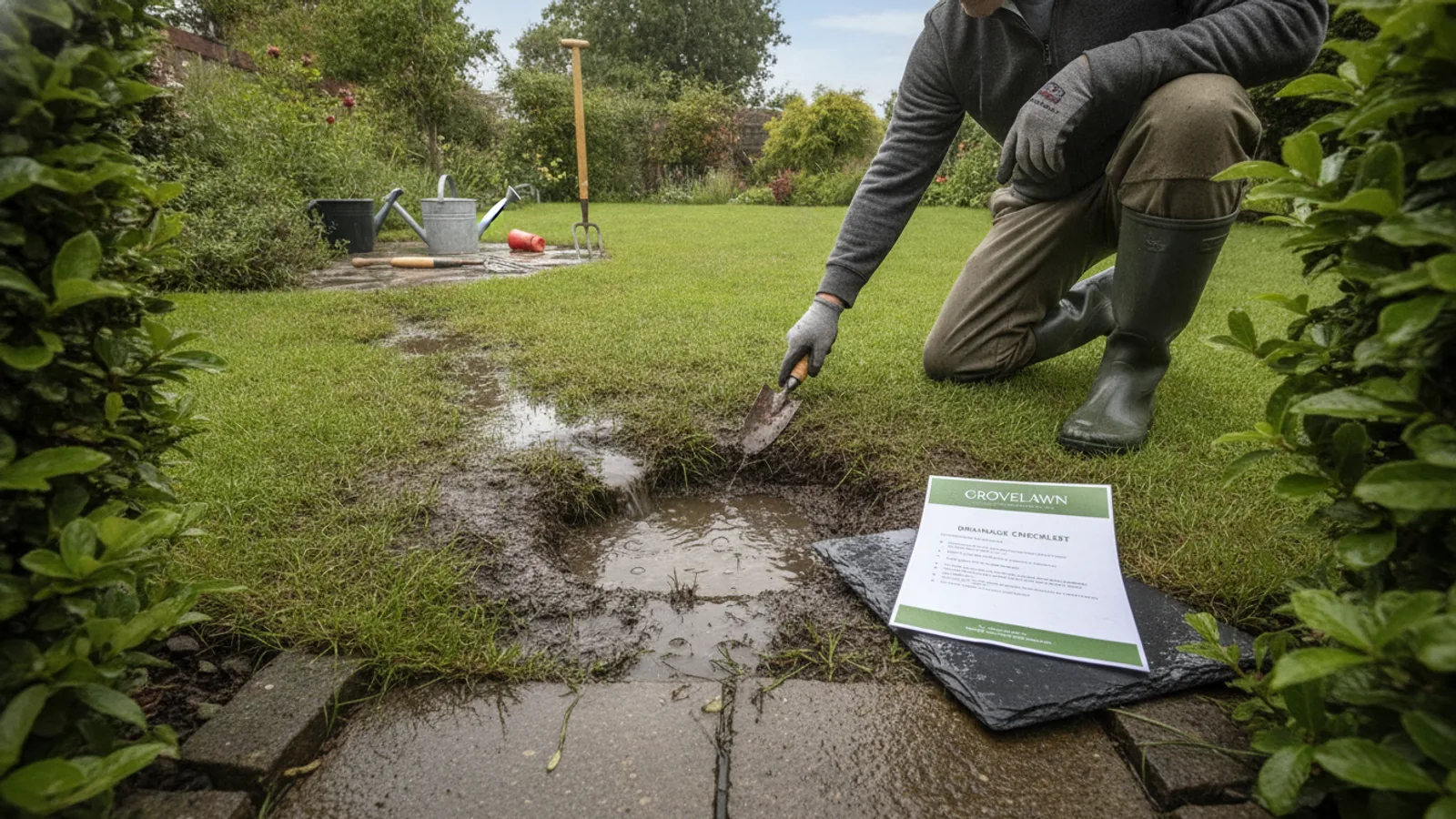
Wait at least a few hours after the rain stops, then walk across your entire lawn and garden beds. Look for areas that remain puddled or feel spongy underfoot. Pay special attention to low spots, along fence lines, and where two slopes meet. Use a stick to poke into the soil—if it sinks in easily more than a few inches and squelches, the soil is waterlogged. Mark these locations on a simple map. Also, check for water seeping out of a hillside, a sign of a spring or poor drainage. Look for areas where the lawn is thinning or where water stains show on fences or walls. This step matters because surface ponding not only kills plants but also provides breeding grounds for mosquitoes. Over time, soggy soil can cause tree roots to rot and foundations to shift.
Test soil percolation and runoff direction
To understand how fast water absorbs into your soil, dig a small test hole about six inches deep and fill it with water. Time how long it takes for the water to completely disappear. If it takes more than a few hours, your soil has poor drainage. Now, observe which direction water naturally flows across your property during a rain. Use a garden hose to simulate a moderate rain in a few spots—watch where the water goes. Does it run toward your house, down a slope, or into a drain? If it heads toward a structure, you have a runoff problem that needs redirection. You can create a shallow swale or a rain garden to intercept and absorb water. Also, check the slope of your downspout splash blocks—they should be set at a slight angle to push water away. This step matters because understanding your soil type and natural watercourses is essential for designing effective fixes.
Document findings and plan simple fixes
Now that you have inspected every part, write down all the problems you noticed. For each issue, decide if you can fix it yourself or if you need professional help. Simple fixes include cleaning gutters, adjusting downspouts, re-grading small areas with a rake, digging a small trench to direct water away, or clearing a blocked drain. Mark off the fixes you'll do now and prioritize the most urgent ones—anything that sends water toward the foundation is urgent. For larger issues, like a French drain that needs installation or a deep clog under a driveway, take notes and get quotes from professionals. Also, note what worked well so you can repeat the process next time. Finally, set a reminder in your calendar to check again after the next heavy rain to see if your fixes helped. This step matters because planning turns your observations into action that protects your home.
Quick Reference
| Situation | Action | Why it helps |
|---|---|---|
| Water pools next to the foundation wall after rain and stays for over a day. | Clear the downspout, extend it with a flexible extension to discharge water at least 5 feet from the wall, and build up the soil near the wall to create a 6-inch slope away from the house. | Standing water against the foundation can seep into basements, weaken the concrete, and lead to costly structural repairs, so you must move it away. |
| A storm drain in your yard is full of wet leaves and silt after a storm. | Lift the grate, remove all debris with a trowel or gloved hands, and pour a bucket of water to rinse the pipe; if it still doesn't drain, flush it with a garden hose. | Blocked drains divert water onto your lawn and driveway, causing erosion and possible flooding, so keeping them clear keeps the system functional. |
| Low-lying areas in the lawn stay spongy and waterlogged for two days after rain. | Mark the area, aerate the lawn, mix coarse sand or compost into the soil, and create a shallow trench or swale to move water to a dry well or rain garden. | Poorly draining soil suffocates grass roots, encourages moss and disease, and creates breeding grounds for pests, so improving infiltration will balance moisture levels. |
Common Issues
- Clogged downspouts that let water overflow near the foundation: Clean out leaves and debris with a trowel, then run a garden hose into the downspout to flush out any blockages. Attach a downspout strainer to prevent future clogs and consider a mesh guard for your gutters.
- Soil that slopes toward the house causing water to pool against the foundation: Add fill dirt around the foundation to create a slope of at least 6 inches over 10 feet. Compact the soil gently and reseed or plant grass to stabilize it. Avoid placing mulch high against the siding.
- Yard drains that stay full of water and don't drain away: First, clean out debris from the grate. If water still stands, use a plumber's snake or a high-pressure hose to clear the pipe. If that fails, the drain pipe may be broken or improperly pitched—call a drainage contractor to repair or replace it.
Advanced Tips
- Consider installing a rain barrel with a diverter to collect downspout water for irrigation, but make sure to place it on a sturdy, level base and overflow it away from the house.
- Use a laser level or a line level to get precise slope measurements for larger re-grading projects, ensuring a minimum 1% drop (about 1 inch per 8 feet) away from structures.
- For chronically wet areas, plant water-tolerant species like native wetland plants in a rain garden, which can absorb many times more water than ordinary turf grass.
Final Checklist
- I have cleaned all gutters and downspouts and confirmed that water flows freely through each one.
- I have checked that all downspouts discharge at least 5 feet away from the foundation or have extensions attached.
- I have inspected the soil slope around the entire house and corrected any areas sloping toward the foundation.
- I have identified any low spots or drain clogs and made a plan to fix them within the next week.
FAQ
How long after rain should I do this drainage check?
It's best to wait until the rain has stopped and the ground is still damp, usually within a few hours. You want to see where water collects, but you also want the surface to be safe to walk on. If it's still raining, postpone the inspection. If it has been days and everything is dry, you may need to simulate rain with a hose to test certain areas.
What should I do if I find a serious drainage problem like a cracked foundation or a collapsed drain pipe?
For anything beyond simple cleaning or regrading, hire a licensed structural engineer or drainage contractor. They have the tools to inspect underground pipes and can recommend solutions like French drains, sump pumps, or foundation waterproofing. Get at least two quotes and check references before paying for any major work.
Can I use gravel or rocks to improve drainage in a soggy area?
Yes, but you need to use gravel properly. Dig a shallow trench, line it with landscape fabric, fill it with gravel, and then top with a perforated pipe that directs water to a drain or safe outlet. Merely scattering gravel on top of soil won't help because water will pool underneath. This is a DIY project for simple cases, but for complex areas, consult a professional.