A Seasonal Pruning Plan For Common Garden Shrubs Checklist For First Time Readers
A practical step-by-step guide to a seasonal pruning plan for common garden shrubs checklist for first-time readers, including preparation, instructions, common issues, tips, and next steps.
A Seasonal Pruning Plan For Common Garden Shrubs Checklist For First Time Readers
This guide provides a complete seasonal pruning plan for common garden shrubs, tailored for first-time gardeners. It explains when and how to prune different types of shrubs to promote healthy growth, abundant blooms, and a tidy shape. The guide includes preparation steps, clear instructions, troubleshooting tips, and answers to common questions. By following this plan, you will gain confidence in caring for your shrubs throughout the year, ensuring they remain vibrant and well-maintained.
Fast Answer
- Prune spring-flowering shrubs immediately after they finish blooming to avoid cutting off next year's flower buds, which form in late summer.
- For summer-flowering shrubs, prune in late winter or early spring before new growth begins, as they bloom on new wood.
Before You Start
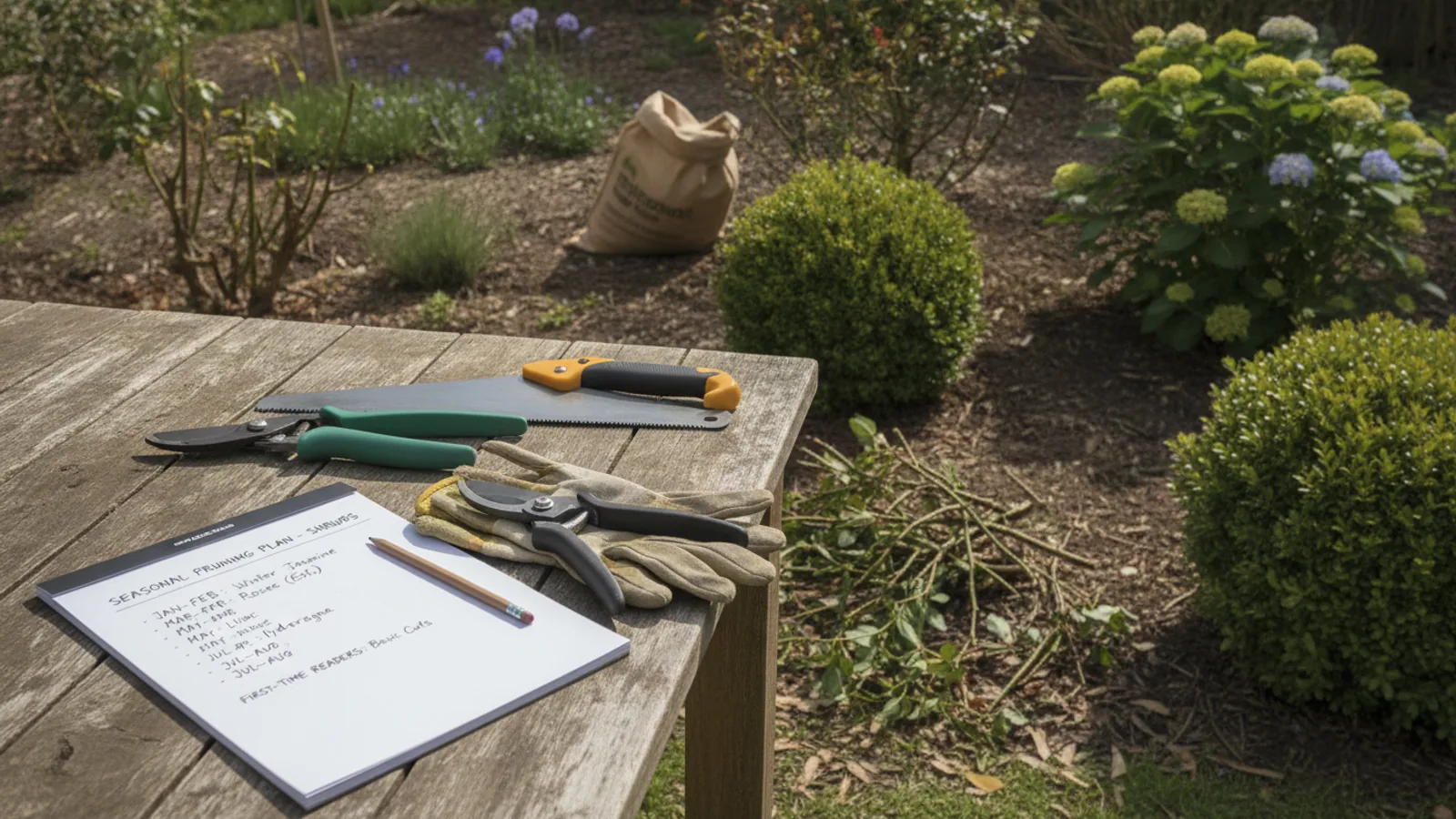
- Gather clean, sharp pruning shears for small branches, loppers for medium branches, and a pruning saw for larger limbs. Disinfect blades with rubbing alcohol to prevent spreading disease.
- Identify each shrub species and know its bloom time (spring or summer) to determine the correct pruning window. Check plant tags or reliable gardening resources if unsure.
- Wear thick gardening gloves to protect your hands from thorns and rough bark, and safety glasses to shield your eyes from flying debris and branch splinters.
- Prepare a tarp or wheelbarrow to collect pruned branches for easy cleanup and disposal, and have a first-aid kit nearby in case of minor cuts.
Step-by-Step Instructions
Inspect Your Shrubs and Gather Tools
Before making any cuts, walk around your garden and examine each shrub closely. Look for signs of damage, disease, or dead wood, such as broken branches, discolored bark, or areas with no leaves. Use a notebook to record which shrubs need attention and note their flowering type. Ensure your pruning tools are clean and sharp, as dull blades can tear bark and create entry points for pests. Check that you have the right tool for each branch size; use shears for branches under half an inch, loppers for up to two inches, and a saw for larger limbs. Finally, disinfect your tools again before you begin to minimize the risk of transferring pathogens from one plant to another.
Remove Dead, Diseased, or Damaged Wood First
Start by cutting out any branches that are clearly dead, diseased, or broken. This is essential for the shrub's overall health. Dead branches are unproductive and can harbor insects; diseased wood can spread illness; broken limbs invite decay. Cut these branches back to the nearest healthy joint or to the base of the shrub. For thick branches, use the three-cut method to prevent tearing: first, cut a notch on the underside of the branch, then cut from the top, and finally make a clean cut just outside the branch collar. Dispose of any diseased material away from your garden, and do not compost it, as heat may not kill all pathogens.
Thin Out Overcrowded Branches
Next, thin the shrub's interior to allow sunlight and air to penetrate. Overcrowded growth blocks light, making the center bare and increasing humidity, which invites fungal diseases. Remove any crossing branches that rub against each other, as their wounds cannot heal properly, and remove any weak, spindly shoots that add little to the plant's structure. Cut these branches at their origin, either at the base or where they join a larger branch. Continue until you see an even spacing of main branches. After thinning, the shrub should look more open and balanced. This step is vital for maintaining a vigorous and productive plant.
Shape the Shrub to Its Natural Contour
Once the interior is thinned, you can shape the outer growth to maintain a pleasing habit. Use sharp pruning shears to trim the ends of the branches, always cutting just above a healthy bud that faces the direction you want new growth to go. Stand back occasionally and check that the shrub is symmetrical and balanced. Do not cut all the branches to the same length, as this creates an unnatural appearance. Instead, follow the shrub's natural shape, whether it is rounded, upright, or spreading. Remove any branches that stick out awkwardly. This step not only improves aesthetics but also encourages denser growth below the cut, making the shrub look fuller.
Prune Spring Bloomers Right After Flowering
If you have shrubs that bloom in spring, such as lilacs or forsythias, prune them immediately after they finish flowering. This timing is crucial because these plants set their flower buds in late summer for the next year. If you prune too late in the season, you will remove the buds and have no blooms in spring. For shrubs that are very overgrown, you can remove up to one-third of the oldest, thickest stems at ground level to renew the plant. This encourages new, vigorous growth from the base. After pruning, apply a layer of mulch around the root zone and water well if rainfall is scarce.
Prune Summer Bloomers Before New Growth in Late Winter
For shrubs that bloom in summer, such as hydrangeas that bloom on new wood, prune in late winter or early spring before new growth starts. This encourages the production of many new shoots that will bear flowers in the same season. Remove any remaining old flower heads, and cut back the stems by about a third to a half of their height, depending on the desired size. Make cuts just above a pair of healthy buds on the stem. For compact varieties, you can cut back more heavily, but avoid removing more than one-third of the total plant volume. This method ensures a full, blooming shrub for the summer.
Quick Reference
| Situation | Action | Why it helps |
|---|---|---|
| It is early spring and your lilac shrub is about to bloom. | Do not prune now. Wait until the flowers fade in late spring, then remove spent blooms and any dead or crossing branches. | Lilacs bloom on wood from the previous year. Pruning before flowering removes next year's flower buds if you wait until summer or fall, and pruning now removes the current season's blooms. |
| Your hydrangea has finished blooming in autumn. | In late winter or early spring, cut back the stems to about a foot above the ground for smooth-leaf types, but only remove dead stems for bigleaf types. | Smooth-leaf hydrangeas bloom on new wood, so cutting back hard produces strong new shoots. Bigleaf hydrangeas bloom on old wood, so pruning too early removes the developing buds. |
| Your shrub has many branches crossing and rubbing together in the center. | Remove the smaller or weaker branches at their base, or where they join a main stem, to clear the center and reduce friction. | Rubbing branches cause open wounds that allow diseases and pests to enter. Removing them improves air circulation and keeps the shrub healthy. |
Common Issues
- No flowers on my spring-blooming shrub.: You likely pruned it at the wrong time, removing flower buds. Allow the shrub to grow normally for a year without pruning, and then set a calendar reminder to prune it only right after it blooms next spring.
- Shrub looks lopsided or has an unnatural shape.: Do not cut all branches to the same length. Instead, prune selectively to favor natural growth, cutting each branch at a different height and angle to create a full, balanced shape.
- Wilted or discolored leaves appear after pruning.: This could be due to stress, especially if you pruned heavily. Water the shrub deeply and mulch around the base to retain moisture. Avoid fertilizing until new growth appears, and if the problem persists, check for pests or disease.
Advanced Tips
- For shrubs that produce berries, such as holly, limit pruning to early spring before new growth to avoid cutting off the flower buds that will become berries.
- Learn the difference between renewal pruning and heading back. Renewal removes whole stems to the ground, rejuvenating old shrubs, while heading cuts back stem tips to control size.
- If you inherit an overgrown shrub, stagger the renovation over three years, removing one-third of the oldest stems each year to avoid shocking the plant.
Final Checklist
- Identify each shrub and confirm its bloom time (spring or summer) before you start.
- Clean and disinfect pruning tools before you begin and between shrubs to prevent disease spread.
- Remove dead, diseased, or damaged wood first, then thin crossing and overcrowded branches.
- Prune spring bloomers immediately after flowering, and summer bloomers in late winter or early spring.
FAQ
What is the best time to prune most shrubs?
It depends on when they bloom. Spring-flowering shrubs should be pruned right after they finish flowering. Summer-flowering shrubs are pruned in late winter or early spring. For non-flowering shrubs, you can prune in late winter or early spring to shape them.
How much can I cut back a shrub without harming it?
A general rule is to avoid removing more than one-third of the shrub's total growth in any single pruning session. Removing too much can stress the plant. For overgrown shrubs, use renewal pruning to remove a few older stems each year over a few years.
Should I seal pruning cuts with a tree wound dressing?
No, modern research suggests that pruning cuts are better left unsealed. Wound dressings can trap moisture and hinder the plant's natural healing process. It's best to use clean tools to make crisp cuts at the right location.