Common Mistakes When Planning A Seasonal Pruning Plan For Common Garden Shrubs
A practical step-by-step guide to common mistakes when planning a seasonal pruning plan for common garden shrubs, including preparation, instructions, common issues, tips, and next steps.
Common Mistakes When Planning A Seasonal Pruning Plan For Common Garden Shrubs
Pruning shrubs seems straightforward, but a seasonal plan often fails when gardeners overlook timing, tool hygiene, or the plant's natural shape. This guide walks through the most common planning mistakes—from pruning at the wrong time to ignoring growth habits—and shows how to avoid them with a clear, step-by-step approach. You'll learn to assess each shrub, gather the right tools, and prune with confidence, ensuring healthy growth and abundant blooms. Whether you're a beginner or have some experience, these practical tips will help you create a pruning schedule that works for your garden and your shrubs.
Fast Answer
- Avoid pruning spring-blooming shrubs in late winter or early spring; you'll cut off the flower buds for the current season. Instead, prune them right after they finish blooming.
- Never prune more than one-third of a shrub's total growth in a single season. Removing too much stresses the plant and can lead to dieback or poor flowering.
Before You Start
- Identify each shrub species and note its bloom time (spring, summer, or fall) and whether it blooms on old wood or new wood. This determines the correct pruning window.
- Gather sharp pruning shears, loppers, and a pruning saw, and clean them with rubbing alcohol or a bleach solution before starting to prevent spreading disease.
- Prepare a container for removed branches and a pair of thick gloves to protect your hands from thorns or rough bark.
- Check the weather forecast: prune on a dry day to reduce the risk of fungal infections, and avoid pruning during extreme heat or frost.
Step-by-Step Instructions
Assess Each Shrub's Growth Habit
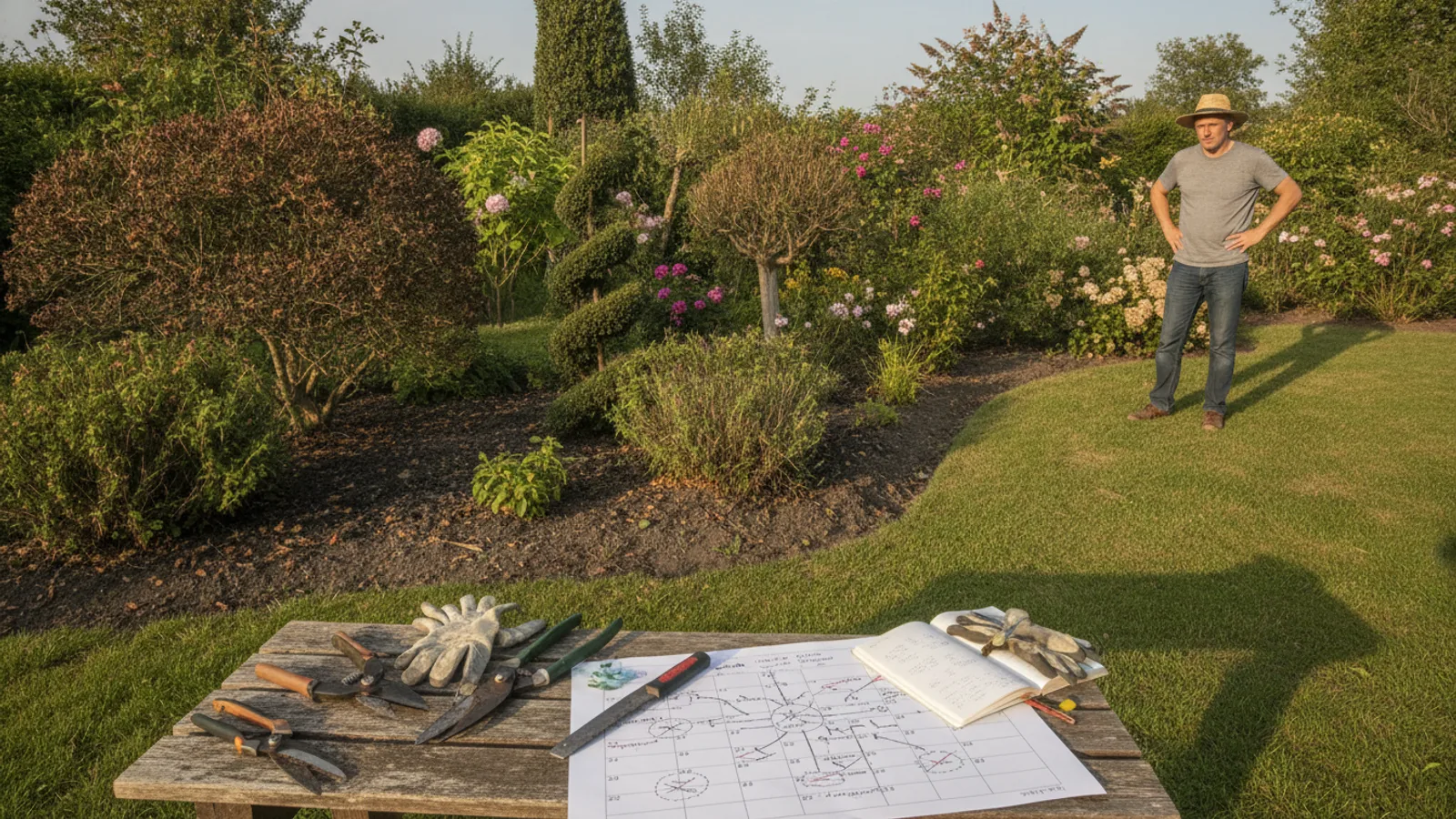
Before you make a single cut, walk around your garden and look at each shrub individually. Note its overall shape: is it naturally rounded, upright, spreading, or arching? Check for dead, diseased, or damaged branches—these should be your first priority. Also, identify any crossing branches that rub together, as they create wounds where pests and diseases enter. Determine the shrub's bloom time: spring bloomers like lilac and forsythia set flower buds on old wood from the previous year, while summer bloomers like hydrangea paniculata bloom on new wood. Write down each shrub's name and bloom time in a notebook or garden journal. This simple assessment prevents many common mistakes, because it tells you when and where to cut. For example, cutting a spring bloomer in late winter removes the buds that would have flowered in a few weeks. Take your time here; a thoughtful look now saves you from heartache later.
Choose the Right Tools for the Job
Using the correct tool is essential for clean cuts that heal quickly. For branches thinner than a pencil, use sharp hand pruners. For branches up to 1.5 inches thick, use loppers, which give you more leverage and cut cleanly. For larger branches, a pruning saw is necessary. Make sure every tool is sharp; a dull blade crushes the stem, leaving a ragged edge that invites disease. Clean your tools with rubbing alcohol or a 10% bleach solution before you start and between shrubs, especially if you've removed any diseased wood. This prevents spreading pathogens from one plant to another. Also, consider the type of cut: bypass pruners (with two curved blades) make cleaner cuts than anvil pruners (which crush), so use bypass for live wood. Having the right tools means you can make precise cuts without tearing the bark, which helps the shrub heal faster and reduces the chance of dieback.
Prune Spring Bloomers Right After Flowering
Shrubs that bloom in early spring, such as lilac, forsythia, and spirea, set their flower buds on wood that grew the previous year. If you prune them in late winter or early spring, you'll cut off all those buds and lose the season's display. The correct time is immediately after the flowers fade, usually in late spring or early summer. At that point, the shrub has finished blooming, and you can shape it without sacrificing next year's flowers. When you prune, remove dead wood first, then thin out crowded branches, and finally shape the shrub by cutting back long, leggy stems to a healthy bud. Make cuts at a 45-degree angle just above a bud that faces the outside of the shrub. This encourages new growth that will carry next spring's flowers. Don't wait too long after flowering, because the shrub will start setting buds for next year in mid-summer, and late pruning again removes those buds. Consistency is key.
For Summer Bloomers, Prune in Late Winter or Early Spring
Shrubs that bloom in summer or fall, such as butterfly bush, summer spirea, and most hydrangeas (except bigleaf types), form their flower buds on new growth that emerges in spring. Therefore, the best time to prune is late winter or early spring, before new growth starts. At this time, you can see the shrub's structure clearly without leaves, making it easier to remove dead or weak wood. You can cut these shrubs back hard—down to 6 to 12 inches from the ground if you want a compact shape, or just remove the previous year's growth to a framework of main branches. This encourages vigorous new shoots that will bear flowers in the same season. However, be careful not to prune too late in spring after new growth has begun, as you'll remove the developing flower buds. Always use clean, sharp tools and make cuts just above a healthy bud. This practice keeps the shrub vigorous and ensures a bountiful bloom.
Remove Dead, Diseased, and Damaged Wood First
Whenever you prune, start by cutting out all dead, diseased, and damaged branches, commonly called the three D's. Dead wood is brittle and has no green under the bark; diseased wood may show cankers, oozing, or discoloration; damaged wood is cracked or broken. Removing these is crucial because they are entry points for insects and diseases, and they can drain the shrub's energy. Cut dead or diseased branches back to healthy wood, making the cut several inches into the healthy area to ensure you've removed all affected tissue. For damaged branches, make a clean cut just above a lateral branch or bud. Always dispose of diseased wood in the trash, not the compost bin, to avoid spreading pathogens. This step is not only about aesthetics; it improves airflow, reduces disease pressure, and encourages the shrub to focus on new growth. Do this at every pruning session, regardless of the season.
Thin Out Crowded Branches to Improve Airflow
A common mistake is shearing shrubs into tight shapes, which creates a dense outer layer that blocks light and air from reaching the inside. This leads to dieback and increases the risk of fungal diseases. Instead, thin out crowded branches by removing entire stems at their point of origin (the ground or a main branch). Aim to remove about one-third of the oldest, thickest stems each year for renewal. Focus on branches that cross or rub, those that grow inward toward the center, and any that are weak or spindly. Thinning opens the shrub's interior to sunlight and air, encouraging healthy new growth from the base. It also enhances the shrub's natural shape rather than forcing an artificial one. After thinning, step back and check that the shrub looks balanced and not stripped. The goal is a healthy, vigorous plant that flowers well, not a perfectly symmetrical ball.
Quick Reference
| Situation | Action | Why it helps |
|---|---|---|
| Spring-blooming shrub like lilac or forsythia is overgrown | Wait until immediately after it finishes flowering, then prune it. Remove dead wood, and cut back up to one-third of the oldest stems to the ground. | Pruning after bloom preserves the flower buds for next spring, while renewal pruning encourages vigorous new growth and better flowering. |
| Summer-blooming shrub like butterfly bush or panicle hydrangea has leggy growth | In late winter or early spring, cut the whole shrub back to 6 to 12 inches above the ground, or remove one-third of the oldest stems. | These shrubs bloom on new wood, so hard pruning stimulates vigorous new shoots that will produce more flowers in summer. |
| Dead or diseased branches appear on any shrub | Remove them immediately, cutting back to healthy wood several inches below the affected area. Clean your pruning tools with rubbing alcohol afterward. | Removing dead or diseased wood promptly prevents the spread of disease and reduces the risk of pest infestation, keeping the shrub healthy. |
Common Issues
- After pruning, the shrub fails to bloom or has fewer flowers than usual.: This often happens because you pruned at the wrong time, cutting off flower buds. To fix it, wait a full season and prune at the correct time next year. For spring bloomers, prune after flowering; for summer bloomers, prune in late winter. Also, ensure you're not over-pruning; remove only dead wood and shape lightly.
- The shrub looks sparse or has bare patches after pruning.: This may result from removing too many branches at once or cutting too far back. To remedy, allow the shrub to grow without pruning for a year to recover. Next time, prune gradually over several seasons, removing no more than one-third of the oldest stems each year. This encourages new growth from the base, filling in bare areas.
- Pruning cuts are ragged or the bark is torn, leading to dieback.: Ragged cuts happen with dull tools or incorrect cutting technique. Clean up the damage by making a fresh, clean cut just above a healthy bud or lateral branch. Use sharp bypass pruners for live wood and a pruning saw for larger branches. Always cut at a slight angle away from the bud.
Advanced Tips
- For shrubs with variegated leaves, remove any stems that have reverted to solid green, as they grow faster and can overtake the variegation.
- When pruning for shape, try to maintain the shrub's natural form by cutting to an outward-facing bud, never leaving a stub, and stepping back frequently to check your work.
- Consider using the three-cut method for large branches: make an undercut about a foot from the trunk, then a top cut further out, and finally remove the stub just outside the branch collar to prevent tearing.
Final Checklist
- Identify each shrub's bloom time and whether it blooms on old or new wood before pruning.
- Clean and sharpen your pruning tools before starting to ensure clean cuts that heal quickly.
- Remove all dead, diseased, and damaged branches first, then thin crowded growth, and shape only as needed.
- Avoid pruning more than one-third of the total growth in a single season to prevent stress and dieback.
FAQ
How do I know if a branch is dead or alive?
A simple way is to scrape a small notch in the bark with your thumbnail. If the layer beneath is green, the branch is alive. If it's brown and dry, it's dead. You can also bend a twig: live twigs are flexible, while dead ones snap easily. For thick branches, use a knife to check the cambium layer. Remove dead wood at any time, as it doesn't harm the shrub.
What is the best time to prune a shrub that blooms in spring?
Spring bloomers set their flower buds on growth from the previous year. The best time to prune them is immediately after they finish blooming, usually in late spring or early summer. This gives the shrub time to develop new growth and flower buds for the next spring. Pruning in late winter or early spring removes the buds and sacrifices the current season's flowers.
How much can I prune a shrub without harming it?
As a general rule, never remove more than one-third of the shrub's total growth in a single year. Removing too much stresses the plant and can lead to dieback or poor flowering. If a shrub is severely overgrown, spread the pruning over several seasons, removing the oldest and thickest stems gradually. For renewal pruning, you can cut one-third of the oldest stems to the ground each year.