How To Choose A Lawn Care Routine For A Dry Spell
A practical step-by-step guide to how to choose a lawn-care routine for a dry spell, including preparation, instructions, common issues, tips, and next steps.
How To Choose A Lawn Care Routine For A Dry Spell
Choosing a lawn-care routine for a dry spell means shifting from a standard schedule to one that focuses on water conservation, root health, and stress reduction. This guide helps you assess your lawn's condition, adjust mowing and watering practices, and implement simple strategies to keep grass alive during limited rainfall. It covers preparation, step-by-step actions, quick reference for common situations, troubleshooting, and advanced tips, all aimed at helping your lawn recover and stay resilient.
Fast Answer
- Raise your mower blade to 3-4 inches and mow less frequently, leaving clippings on the lawn to shade soil and retain moisture.
- Water deeply but infrequently, ideally in the early morning, giving about 1 inch of water per week, and adjust based on rainfall and soil type.
Before You Start
- Check local water restrictions or drought advisories to understand any rules about outdoor watering, as they vary by region.
- Inspect your sprinkler system for leaks, misaligned heads, or overspray onto hard surfaces to prevent wasting water.
- Walk over your lawn to identify stressed areas, such as spots that feel spongy or show footprints that don't spring back.
- Have a soil moisture meter or a long screwdriver ready to test soil dampness at a depth of 6 inches before watering.
Step-by-Step Instructions
Assess Lawn Stress Levels
Start by examining your lawn for signs of drought stress. Look for grass that has turned a dull, bluish-gray color, especially in areas that receive full sun or have sandy soil. Walk across the lawn and observe if your footprints remain visible after a few seconds; if they do, the grass is not bouncing back, which indicates dehydration. Also, check for leaf blades that are folding or curling, which is a common response to water shortage. Understanding the degree of stress helps you decide how aggressively to adjust your routine. For example, if only certain patches are affected, you can target those areas rather than watering the whole lawn. The specific action here is to create a simple map of your yard, marking the most stressed zones. Practically, you should check your lawn in the morning and late afternoon for two consecutive days to get a reliable picture. This check matters because it prevents you from overreacting and watering uniformly, which wastes water and may harm less stressed parts of the lawn.
Adjust Mowing Height and Frequency
Mowing too short exposes soil to the sun and encourages water loss. Raise your mower deck to leave the grass at a height of 3 to 4 inches, which is taller than usual. The taller grass shades the soil, reduces evaporation, and promotes deeper root growth. Also, mow less frequently: only cut when the grass has grown about one-third taller than its ideal height. This means if your target height is 3 inches, wait until it reaches 4 to 4.5 inches before mowing. Keep the mower blade sharp to make clean cuts and reduce stress on the grass. As a practical check, after mowing, ensure you remove no more than one-third of the grass blade length in a single pass. This ratio prevents shock and over-stress. The reason this check matters is that removing more than one-third can severely weaken the grass, leaving it vulnerable to drought and pests. Additionally, leave grass clippings on the lawn; they break down and return moisture and nutrients to the soil.
Water Deeply and Infrequently
When you do water, the goal is to saturate the soil to encourage deep rooting. Instead of watering a little every day, give your lawn a deep soaking once or twice a week. Apply about 1 inch of water per watering session, which should penetrate to a depth of 6 to 8 inches. To measure this, place empty tuna cans or straight-sided containers around the lawn and note how long it takes for them to collect 1 inch of water. Use that timing for future waterings. Water early in the morning between 4 a.m. and 8 a.m. to minimize evaporation and allow the grass to dry out during the day, reducing fungal risk. As a practical check, after watering, dig a small hole with a trowel to see if the soil is moist to the expected depth. This check matters because watering too shallowly trains roots to stay near the surface, making the lawn more drought-prone, while watering too deeply may cause runoff and waste water.
Add Organic Matter or Compost Topdressing
A thin layer of compost applied to the lawn can improve soil structure, increase its water-holding capacity, and provide nutrients without stimulating excessive growth. Spread a quarter-inch layer of fine compost over the grass using a shovel or spreader, then rake it gently so it settles into the soil. This is best done just before an expected rain or watering. The organic matter works like a sponge, helping the soil retain moisture and releasing it slowly to roots. As a practical check, after applying, water the lawn lightly to help the compost settle and begin integrating with the soil. This check matters because unincorporated compost can form a crust that blocks water absorption. Also, avoid overdoing it, as a thick layer can smother the grass. For a dry spell, this topdressing also improves microbial activity, which supports root health and helps the lawn withstand stress.
Limit Foot Traffic and Raking
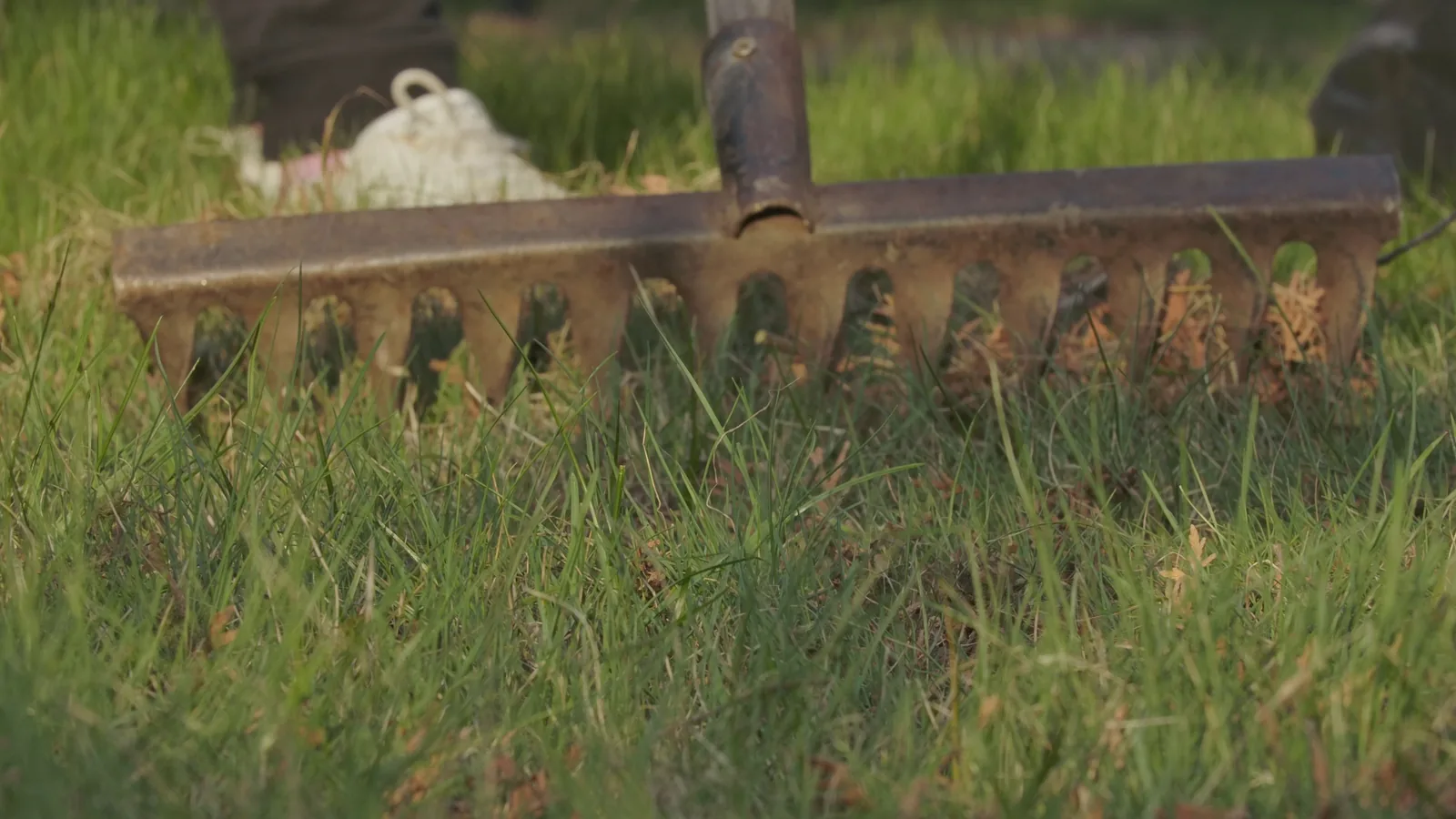
During a dry spell, the grass is more fragile and easily damaged. Keep foot traffic minimal, especially in stressed areas. If you must walk on the lawn, consider temporarily placing stepping stones on paths that you frequently use. Avoid raking dead or yellowing grass; leave it as a protective layer that shades the soil and reduces moisture loss. If there are extensive thatch or leaf accumulations, use a rake only lightly to remove excess, but do not disturb the soil. As a practical check, observe if there are worn paths or bare spots; if so, cordon off those areas with string or light stakes to remind others to avoid them. This check matters because every step compacts the soil, reducing its ability to hold air and water, and damages the grass crowns, making regrowth slower. By limiting traffic, you allow the lawn to save energy for surviving the drought.
Monitor and Adjust Based on Weather
The dry spell may be punctuated by occasional rain or cooler days, so your routine needs to be flexible. Keep a simple log of rainfall amounts and temperatures. If you receive more than half an inch of rain in a given week, skip your next watering. If a heatwave arrives, consider watering twice a week, but still only 1 inch each time. Also, adjust mowing; if grass growth slows due to drought, you might mow every two weeks instead of weekly. The practical check involves regularly inspecting the lawn for color changes; if it starts to green up after rain, resume a more frequent mowing and a regular watering schedule. This check matters because sticking to a fixed routine regardless of conditions can either waste water or leave the lawn under-serviced. By staying observant and flexible, you optimize the health of the lawn while conservatively using water.
Quick Reference
| Situation | Action | Why it helps |
|---|---|---|
| Grass is turning a bluish-gray color and footprints remain visible. | Water deeply immediately, applying 1 inch of water, and then adjust your watering schedule to early morning, twice a week. | These signs indicate dehydration and severe stress; deep watering helps rehydrate the soil and revive the grass. |
| You have sandy soil that drains water quickly and feels dry soon after watering. | Water more frequently, such as three times a week, but with less water each time, about 0.5 inch per session. | Sandy soil cannot hold water long; shorter, more frequent watering allows moisture to be absorbed before it percolates away. |
| Your lawn shows patches of fungal disease, such as brown or reddish circular spots. | Stop watering for a few days, and water only in early morning to reduce leaf wetness; also adjust any sprinklers to avoid overspray. | Fungal diseases thrive on moisture; reducing watering and ensuring leaves dry quickly helps halt the spread. |
Common Issues
- Grass turns brown and appears dead despite watering.: Check if your soil is overly compacted or if you have a thick layer of thatch; core aerate the lawn to improve water penetration, and topdress with compost to enhance soil structure.
- Water runoff is flowing onto sidewalks or driveways.: Adjust sprinkler heads to avoid overspray, and water in shorter cycles: water for 10 minutes, wait 30 minutes, then water again to reduce runoff and allow infiltration.
- Lawn has uneven dry patches that wither faster than the rest.: Inspect the area for soil that is shallow or poor, and manually water those spots with a hose-end sprinkler, or apply a wetting agent to help water absorb more evenly.
Advanced Tips
- Consider installing a rain sensor on your irrigation system so it automatically skips watering when rainfall is sufficient.
- Raise the cutting height of your mower to the highest setting for the entire dry spell, not just the first mow, to maximize shade and reduce water loss.
- Use a soaker hose or drip irrigation for lawn edges and narrow strips where sprinklers waste water and may not deliver evenly.
Final Checklist
- Raise mower to 3-4 inches and keep blade sharp for clean cuts.
- Water deeply once or twice a week, early morning, and aim for 1 inch per session.
- Test soil moisture to 6 inches depth before watering and adjust based on rainfall.
- Limit foot traffic and avoid raking or other stress to the lawn during the dry spell.
FAQ
Is it okay to let my lawn go completely dormant during a drought?
Yes, it is generally safe for established lawns to go dormant during a severe drought. The grass will turn brown but the crown and roots remain alive. To help it survive, water lightly (about half an inch) every few weeks to keep the roots hydrated, and avoid heavy traffic. When rain returns, the lawn should recover naturally.
How can I tell if my lawn is actually dead or just dormant?
Perform a simple tug test. Grasp a handful of brown grass and gently pull; if the grass is firmly rooted, it is likely dormant. If it comes out easily with roots attached, it may be dead. Also, check the crowns: if they are pliable and have a white or greenish base, the grass is alive. Water deeply and see if the lawn greens up within two weeks.
Should I fertilize my lawn during a dry spell?
No, avoid fertilizing during a drought. Fertilizer encourages excessive growth, which requires more water and stresses the grass. The lawn is in survival mode, and any extra nutrients can cause salt burn or disease. Wait until the dry spell ends and the lawn is actively growing again to resume regular fertilization.