How To Plan A Low Maintenance Front Garden For A Sunny Plot
A practical step-by-step guide to how to plan a low-maintenance front garden for a sunny plot, including preparation, instructions, common issues, tips, and next steps.
How To Plan A Low Maintenance Front Garden For A Sunny Plot
This guide helps you design a low-maintenance front garden for a sunny plot, focusing on drought-tolerant plants, minimal watering, and simple upkeep. You'll learn how to prepare the soil, choose easy-care plants, install efficient irrigation, and apply mulch to reduce weeding. The steps are practical and tailored for a sunny location, ensuring your garden looks great with little effort. By following this plan, you can enjoy a beautiful front yard without spending hours on maintenance.
Fast Answer
- Choose drought-tolerant, sun-loving plants like lavender, sedum, and ornamental grasses that require minimal watering and care.
- Install a drip irrigation system with a timer to water deeply but rarely, and apply a thick layer of mulch to retain moisture and suppress weeds.
Before You Start
- Test your soil's drainage by digging a hole, filling it with water, and timing how long it takes to drain. This reveals if you need to amend the soil for better water retention or drainage.
- Sketch your front garden to scale, noting sunny spots, paths, and any existing features. This helps you plan plant placement and avoid overcrowding.
- Choose a mix of evergreen shrubs, perennials, and ornamental grasses that thrive in full sun and require little pruning.
- Source materials like landscape fabric, mulch, and compost. Calculate the area to estimate how much you need, and consider using recycled materials to reduce costs.
Step-by-Step Instructions
Assess Your Sunny Plot
Start by observing your front garden at different times of the day to understand how sunlight moves across it. Note which areas receive full sun for at least six hours, which get partial shade, and which are fully exposed. Check the soil type by feeling it when damp: sandy soil feels gritty and drains quickly, clay soil feels sticky and holds water, while loam is balanced. Also, examine existing drainage by looking for puddles after rain. This assessment is crucial because it tells you which plants will thrive and whether you need to improve drainage or water retention. Based on your findings, you can choose plants that match your sun-soaked conditions, saving you time and effort in the long run. A sunny garden dries out faster, so you'll either need more drought-tolerant species or a plan for efficient watering.
Prepare the Soil and Improve Drainage
Once you know your soil type, you can amend it to support low-maintenance plants. If your soil is heavy clay, mix in coarse grit or perlite to improve drainage, as waterlogged roots can rot. For sandy soil, add organic matter like compost to help it retain moisture and nutrients. Spread a 2-3 inch layer of compost over the area and dig it into the top 12 inches of soil. This enriches the soil and improves its structure. Check that the soil is loose and crumbly, not compacted. If the area is prone to waterlogging, consider building a raised bed or adding a French drain to divert excess water. Well-drained soil is essential for most sun-loving plants because it prevents root diseases and encourages deep, healthy root systems, which make plants more drought-tolerant and reduce the need for frequent watering.
Select Low-Water Sun-Loving Plants
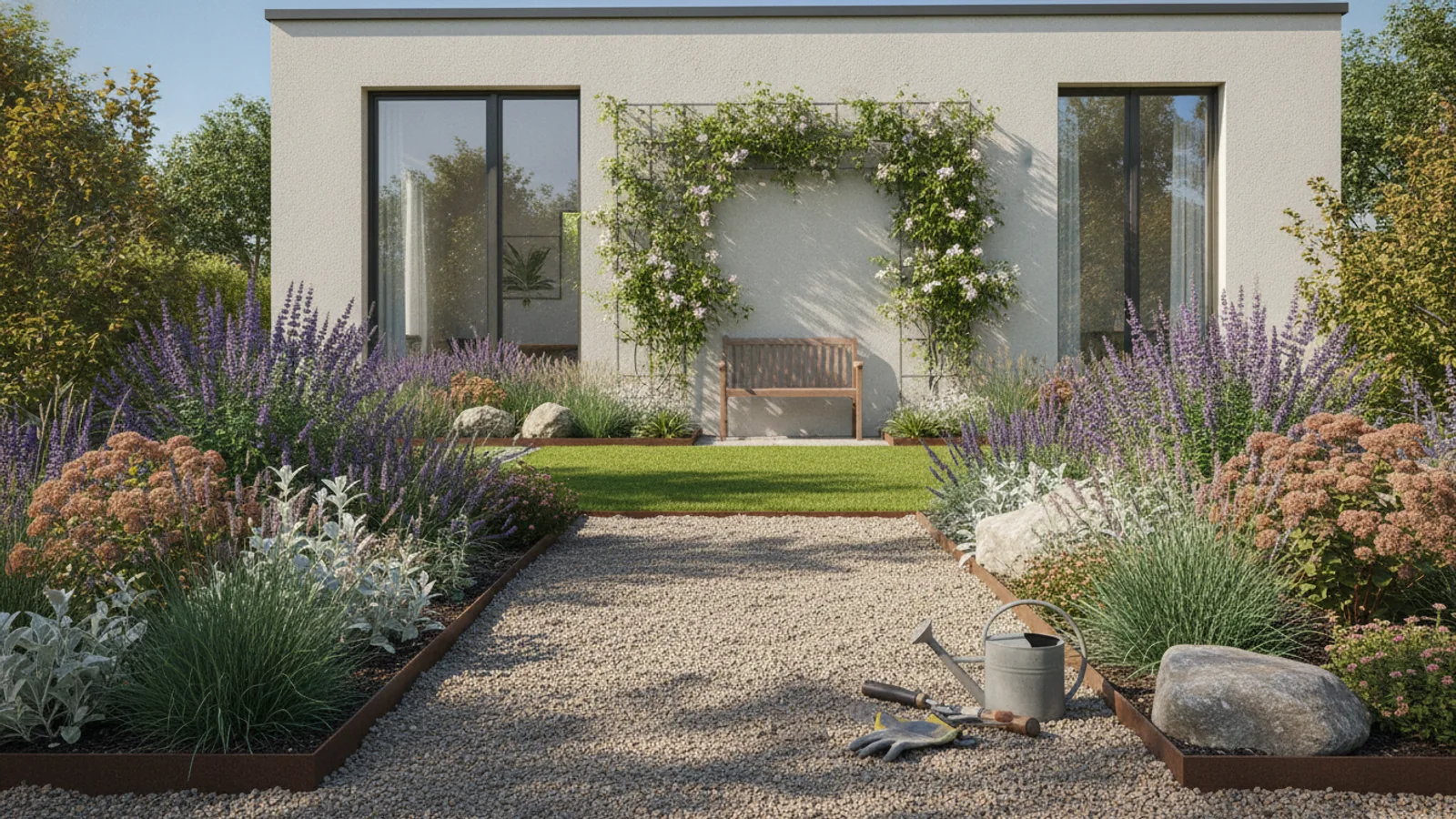
Choose plants that are naturally adapted to full sun and dry conditions, such as lavender, Russian sage, sedum, ornamental grasses like feather reed grass, and Mediterranean herbs like rosemary and thyme. These plants have thick leaves, deep roots, or silvery foliage that help them conserve water. When buying, look for healthy specimens with no signs of pests or disease. Check the plant label for 'full sun' and 'low water' indicators. Aim for a mix of heights and textures: place taller plants at the back, medium ones in the middle, and low-growing ones at the front. Group plants with similar water and sun needs together to simplify care. This selection is key because choosing the right plants for your site reduces the need for supplemental watering, fertilizing, and pest control, making your garden truly low-maintenance and sustainable.
Install Drip Irrigation and Mulch
To minimize water waste and time, set up a drip irrigation system connected to a timer. Lay out drip lines along the base of your plants and cover them with a layer of mulch, such as wood chips or gravel. Drip irrigation delivers water directly to the roots, minimizing evaporation. Set the timer to water deeply but infrequently, perhaps once or twice a week, depending on rainfall and temperature. A simple rain sensor can prevent watering during wet periods. After laying the lines, run the system to check for leaks and ensure even water distribution. Then, spread a 2-3 inch layer of mulch over the soil, but keep it away from plant stems to prevent rot. Mulch suppresses weeds, retains soil moisture, and stabilizes soil temperature. This step is essential because it reduces your need to water and weed, freeing up your time for other activities.
Lay Landscape Fabric to Block Weeds
If you want to further reduce weeding, lay landscape fabric over the soil before planting, or after planting by cutting holes for plants. Purchase a porous landscape fabric that allows water and air to pass through. Spread the fabric over the entire planting area, overlapping edges by at least 6 inches. Secure it with landscape pins every few feet. Then, cut an X-shaped slit for each plant and fold back the flaps to insert the plant. After planting, cover the fabric with a layer of mulch to hide it and weigh it down. Check that the fabric is taut and no gaps exist where weeds could emerge. This fabric is an effective barrier that prevents most weeds from growing, saving you hours of weeding each season. However, it is most useful in areas where you won't disturb the soil frequently, such as around established plants.
Add Structure with Hardscaping and Containers
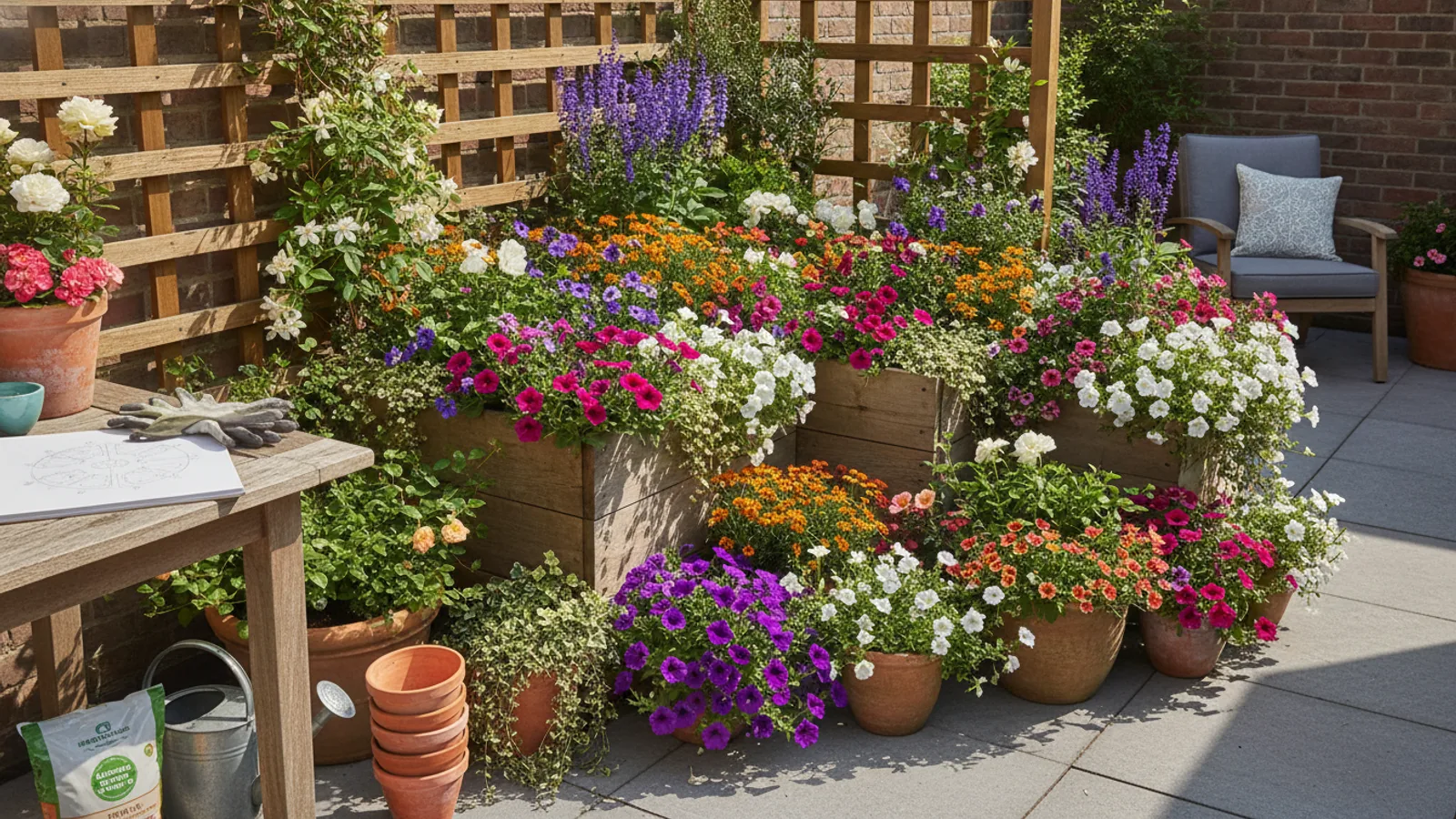
To reduce the area you need to maintain, incorporate hardscaping elements like paths, gravel areas, or a small patio. Use materials like gravel, stone, or paving slabs to create walkways and borders. These features reduce bare soil where weeds can take hold and give your front garden a neat, tidy look. You can also plant in containers, which allow you to control soil and watering more easily. Place pots strategically on steps or beside the door for a welcoming touch. Choose containers made of durable materials like terracotta or fiberglass, and ensure they have drainage holes. Use a quality potting mix designed for containers. This step is essential because hardscaping and containers minimize the space that requires regular weeding and watering, and they add design flexibility, allowing you to change plantings easily without digging up the ground.
Quick Reference
| Situation | Action | Why it helps |
|---|---|---|
| Front garden gets full sun for most of the day and the soil dries out quickly. | Choose drought-tolerant plants like lavender, sedum, and ornamental grasses, and apply a thick layer of mulch to retain moisture. | These plants are adapted to dry conditions and require minimal watering, while mulch reduces evaporation and keeps soil cool. |
| Weeds keep appearing in the flower beds despite regular weeding. | Install landscape fabric under a layer of mulch, and make sure to overlap edges and secure with pins. | Landscape fabric blocks weed growth from below, and mulch prevents weed seeds from germinating, reducing weeding time significantly. |
| You have a busy schedule and often forget to water the garden. | Install a drip irrigation system with a timer to water deeply and infrequently, and set the timer according to the needs of your plants. | A timer automates watering, ensuring plants get consistent moisture without daily effort, and drip irrigation minimizes water waste. |
Common Issues
- Plants become leggy and sparse due to too much shade or too much water.: Move plants to a sunnier location, reduce watering frequency, and cut back excessive growth to encourage branching.
- Soil stays waterlogged after rain, causing root rot.: Improve drainage by adding coarse grit or raising the bed, and avoid overwatering. Consider planting in raised mounds or containers.
- Mulch is too thin and weeds emerge.: Reapply a 2-3 inch layer of mulch, and check that it's not too thick, which can smother plants. Remove visible weeds first.
Advanced Tips
- Incorporate self-seeding perennials like foxgloves or poppies to fill gaps naturally and reduce replanting.
- Use a rain barrel to collect runoff from your roof to water your garden with stored water, reducing overall water use.
- Choose plants with varying bloom times to provide seasonal interest without extra pruning or deadheading.
Final Checklist
- Test soil drainage and amend with compost or grit if needed.
- Choose a palette of drought-tolerant, sun-loving plants with different heights and textures.
- Install drip irrigation with a timer and a rain sensor for efficient watering.
- Apply a 2-3 inch layer of mulch over the soil to retain moisture and suppress weeds.
FAQ
What are some low-maintenance plants for a sunny front garden?
Many shrubs and perennials thrive in sun with little care. Consider lavender, Russian sage, sedum, ornamental grasses like feather reed grass, and herbs like thyme and rosemary. These plants are drought-tolerant, require minimal pruning, and add beauty with their foliage and flowers.
How often should I water a low-maintenance front garden?
The goal is to water deeply but rarely. For most low-water plants, an inch of water per week is sufficient, but this depends on soil type and weather. Use a drip irrigation system with a timer to water once or twice a week, and adjust based on rainfall and temperature.
Can I use gravel instead of mulch in my front garden?
Yes, gravel works well as a mulch in sunny, dry areas. It helps retain soil moisture, suppresses weeds, and lasts longer than organic mulches. However, it doesn't add nutrients to the soil, so you may need to fertilize occasionally. Choose a gravel color that complements your home's exterior.