How To Plan A Small Patio Planting Plan For Long Summer Colour
A practical step-by-step guide to how to plan a small patio planting plan for long summer colour, including preparation, instructions, common issues, tips, and next steps.
How To Plan A Small Patio Planting Plan For Long Summer Colour
This guide provides a step-by-step approach to planning a small patio planting scheme that delivers continuous, vibrant colour throughout the summer months. It covers selecting a colour palette, choosing plants for staggered blooming, arranging containers for visual impact, and maintaining your patio garden for sustained health and beauty.
Fast Answer
- Start by measuring your patio and observing its sun and shade patterns to know which plants will thrive, then choose a simple colour scheme of two or three shades.
- Select a mix of annuals, perennials, and foliage plants that bloom at different times, and group containers with similar watering needs to simplify maintenance.
Before You Start
- Measure your patio area and note how many hours of direct sunlight each spot receives daily, as this determines which plants will bloom well.
- Decide on a colour palette: complementary colours (like purple and yellow) create contrast, while analogous colours (like pink and purple) feel harmonious.
- Gather containers with drainage holes, quality potting mix, slow-release fertiliser, and a watering can or hose with a gentle spray nozzle.
- Sketch a simple layout on paper, placing taller plants at the back or centre and trailing plants at the edges, ensuring each pot has room to grow.
Step-by-Step Instructions
Assess Sunlight and Space
Begin by observing your patio at different times of the day to determine how much direct sunlight each area receives. Most summer-blooming plants, such as petunias, marigolds, and geraniums, require at least six hours of full sun per day, but some shade-tolerant varieties like impatiens and begonias prefer afternoon shade. Use a tape measure to note the dimensions of your patio and the footprint of each container you plan to use. This step is crucial because choosing plants that match your light conditions directly affects their ability to flower consistently. A practical check is to sketch a simple map of your patio, marking sunny spots (more than six hours) and shaded spots (less than three hours). This map will guide every subsequent plant choice, so invest time here to avoid disappointment later.
Choose a Cohesive Colour Palette
Selecting a colour scheme before buying plants will prevent your patio from looking chaotic and will create a professional, visually pleasing design. For a small patio, limit yourself to two or three main colours, plus green foliage. For example, a hot palette of red, orange, and yellow creates a lively, tropical feel, while a cool palette of blue, purple, and pink feels calming. Neutral colours like white or silver foliage can soften the contrast. Consider the colour of your patio furniture and walls, and choose plant colours that complement them. A practical check is to view colour swatches or plant photos together to ensure they harmonise. This matters because a cohesive palette ties the whole space together, making even a tiny area look intentional and well-designed.
Select Plants for Staggered Blooming
To achieve continuous colour from June to September, you need plants that bloom at different times, not all at once. Choose a few early-season bloomers like pansies or lobelia for late spring, then add mid-summer stars like petunias, verbena, and coreopsis. For late summer, consider dahlias, asters, or sedum. Also include some foliage plants with colourful leaves, such as coleus or heuchera, which provide colour even when flowers fade. Research the specific bloom period for each plant species, and aim for at least three different bloom times. A practical check is to create a simple chart listing each plant and its expected bloom months, adjusting your selection until you have good coverage. This matters because staggered blooming prevents lulls where your patio looks bare and ensures a dynamic display throughout the season.
Arrange Containers for Visual Impact
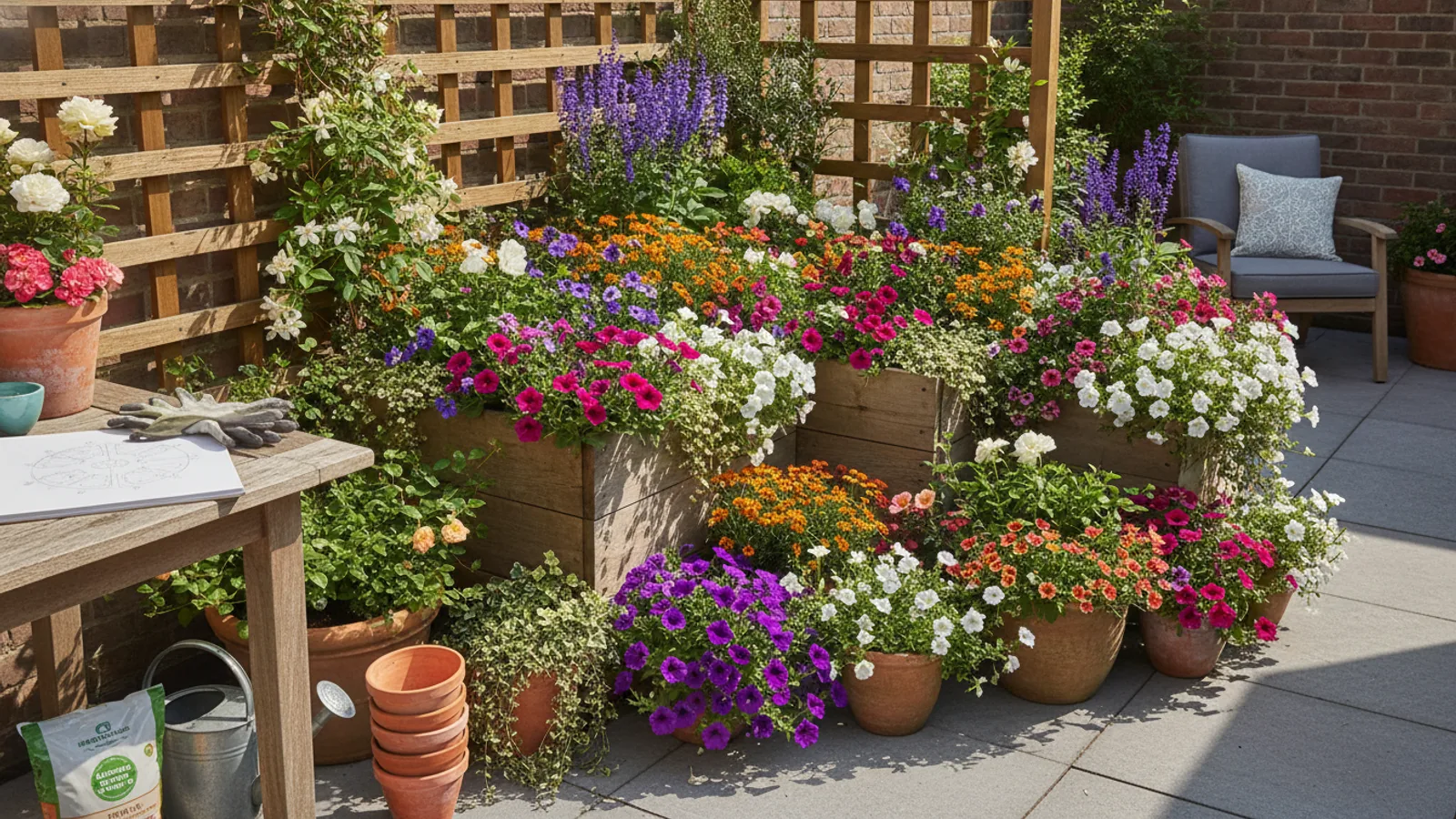
Place your pots to create a pleasing composition that draws the eye and makes the most of your space. Use the 'thriller, filler, spiller' technique: a tall central plant (thriller) like a grass or tall marigold, surrounded by medium mound-forming plants (fillers) like geraniums or zinnias, and trailing plants (spillers) like ivy or sweet potato vine at the edges. Group pots in odd numbers, such as three or five, and vary heights by using plant stands or upturned empty pots. Position taller containers at the back of the patio or against a wall, and shorter ones at the front to ensure every plant gets light. A practical check is to step back and look at your arrangement from different angles, ensuring no plant is hidden. This matters because good arrangement maximizes sunlight exposure and creates a fuller, more abundant look.
Plant and Pot with Quality Soil
Before planting, water your plants thoroughly, then fill each container with a high-quality potting mix, leaving about two inches of space at the top. Gently remove each plant from its nursery pot, tease out the roots if they are circling, and place it at the same depth it was growing. Firm the soil gently around the roots and water generously to settle the soil. Always use containers with drainage holes to prevent waterlogging. Add a slow-release fertiliser at the recommended rate, mixing it into the top layer of soil. A practical check is to press down on the soil; it should feel springy, not compacted. This matters because proper planting depth and drainage are fundamental for root health, which is essential for vigorous growth and abundant flowering.
Maintain Watering and Deadheading Routine
After planting, establish a regular care routine to keep your plants blooming. Check the soil moisture daily by inserting your finger up to the first knuckle; if it feels dry, water thoroughly until water runs out of the drainage holes. During hot, dry spells, you may need to water twice a day. Remove spent flowers, a process called deadheading, every few days by pinching or snipping off the faded bloom at the stem. Also pinch back leggy growth to encourage bushier plants and more flowers. A practical check is to spend five minutes each morning touching the soil and scanning for spent flowers. This matters because consistent moisture and deadheading redirect the plant's energy into producing new buds, extending the flowering season significantly.
Quick Reference
| Situation | Action | Why it helps |
|---|---|---|
| Your patio receives less than three hours of direct sunlight. | Choose shade-tolerant plants like impatiens, begonias, fuchsias, and coleus, and place them in the shadiest spots. | These plants are adapted to low light and will produce colour without getting scorched or failing to bloom. |
| You want to extend the flowering season into early autumn. | Plant late-blooming perennials like asters, sedum, and Japanese anemones alongside your summer annuals. | These perennials start flowering as summer annuals fade, providing a seamless transition of colour through September. |
| Your patio is windy and exposed, causing pots to dry out quickly. | Group pots together to create a sheltered microclimate, and use larger containers that hold more soil moisture. | Grouping reduces wind speed around plants, and larger pots have a greater water reservoir, cutting down watering frequency. |
Common Issues
- Plants are leggy with many leaves but few flowers.: Ensure they get at least six hours of direct sun, and pinch back stems regularly to encourage branching and bud formation. Also, avoid over-fertilising with high-nitrogen feed.
- Leaves are turning yellow, and soil feels soggy.: Stop watering for a few days and check drainage holes for blockages. If the pot has no holes, repot into a container with drainage to allow excess water to escape.
- Flowers appear but then quickly fade or drop.: Deadhead spent flowers promptly, and check for water stress—consistently water during dry spells. Also, ensure the plant isn't getting too much afternoon heat if you're in a hot climate.
Advanced Tips
- Install a drip irrigation system with a timer to maintain consistent moisture, which is especially helpful during holiday periods.
- Use self-watering containers with water reservoirs to buffer against missed waterings and reduce daily maintenance.
- Add a layer of mulch (like pebbles or bark) on top of the soil to reduce evaporation, keep roots cool, and minimise weed growth.
Final Checklist
- Measure sunlight hours on your patio and choose plants suited to your light conditions.
- Select a cohesive colour palette of two or three shades to create a unified design.
- Pick plants with staggered bloom times to ensure colour all summer long.
- Group pots with similar watering needs and set up a daily watering and deadheading routine.
FAQ
How often should I water my patio containers during summer?
Check the top inch of soil daily; if it's dry, water thoroughly until water drains out the bottom. In hot, sunny weather, this might be once a day or even twice, but on cooler or cloudy days, every other day may suffice. To avoid overwatering, always feel the soil before adding more water.
Can I mix perennials and annuals in the same patio pot?
Yes, mixing perennials (like lavender or coreopsis) with annuals (like petunias) can provide structure and long-term interest. However, ensure the soil stays consistently moist, as annuals often need more water than perennials. You may need to repot the perennial separately at the end of the season to give it room to grow.
What does deadheading mean and why is it important?
Deadheading is the act of removing wilted or spent flowers. It encourages the plant to produce new buds rather than forming seeds, thereby extending the flowering period. Simply pinch or cut the flower stem back to the next leaf or node. Do this every few days for a continuous display.