How To Plan A Seasonal Pruning Plan For Common Garden Shrubs
A practical step-by-step guide to how to plan a seasonal pruning plan for common garden shrubs, including preparation, instructions, common issues, tips, and next steps.
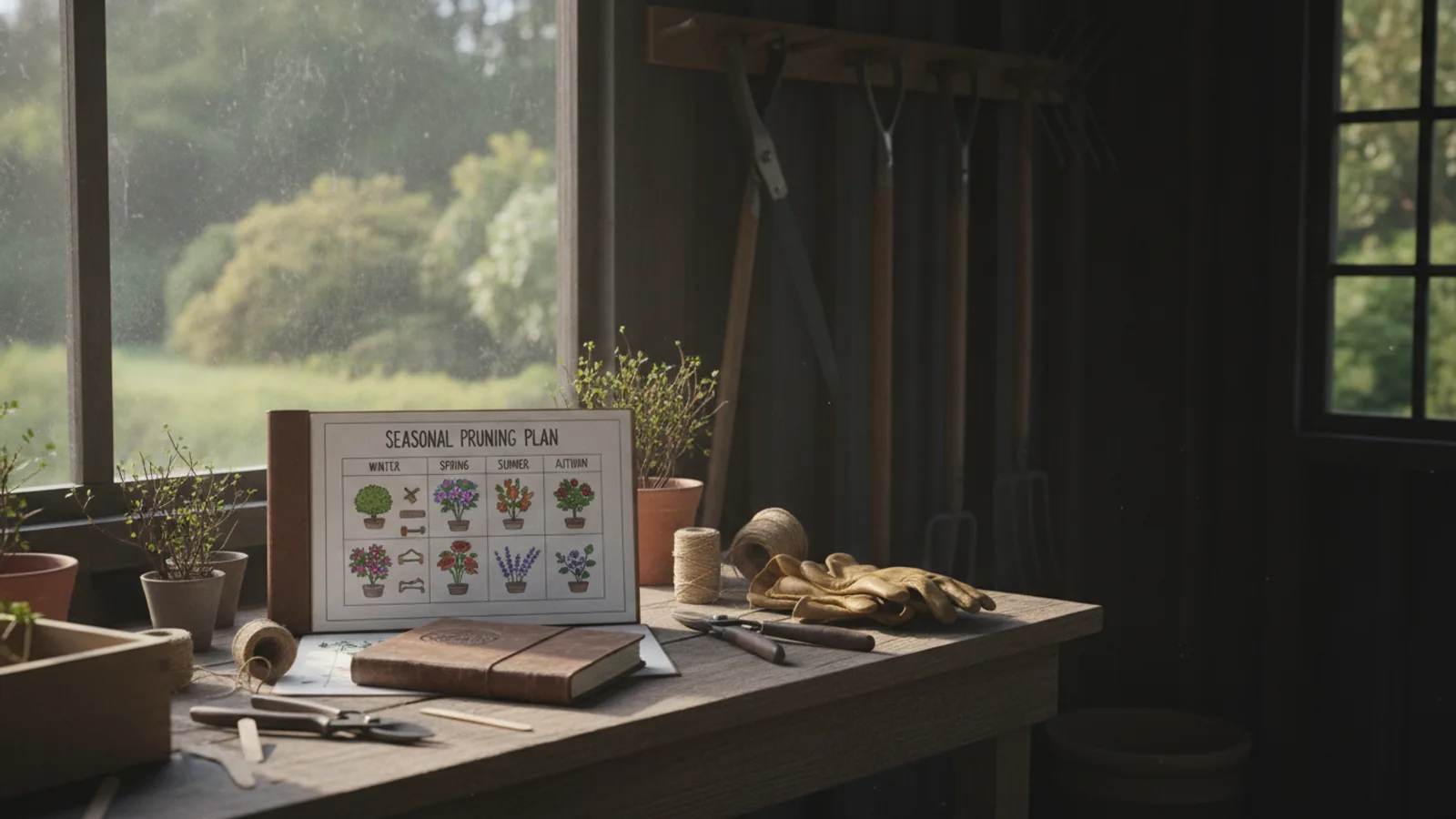
How To Plan A Seasonal Pruning Plan For Common Garden Shrubs
A seasonal pruning plan keeps common garden shrubs healthy, shapely, and blooming. This guide helps you observe each shrub's growth type, choose the right season, and use correct cuts. You will learn to identify spring and summer bloomers, handle overgrown plants, and avoid common mistakes. The plan includes preparation steps, a clear six-step process, troubleshooting tips, and answers to frequent questions, so you can prune with confidence and improve your garden's overall vitality.
Fast Answer
- Prune spring-blooming shrubs right after they finish flowering, and prune summer-blooming shrubs in late winter or early spring before new growth begins.
- Always remove dead, damaged, or diseased wood first, then shape lightly, and never remove more than one-third of the plant's total growth in a single season.
Before You Start
- Inspect each shrub and note whether it blooms on old wood (last year's growth) or new wood (this year's growth), because that determines the correct pruning time.
- Check local climate and recent weather patterns, as an unusually hard frost or late cold snap can affect when it is safe to prune tender shrubs.
- Gather clean, sharp bypass pruners, loppers, a pruning saw, and disinfectant wipes, and sharpen the blades if needed to make smooth cuts that heal faster.
- Identify which shrubs are spring bloomers, summer bloomers, or evergreen, and mark your calendar with the recommended pruning window for each group.
Step-by-Step Instructions
Assess Each Shrub's Growth Pattern
Start by walking around your garden and examining each shrub carefully. Look for the shape, the location of old and new wood, and any buds that are swelling. Use your fingers to bend a few twigs: if the wood snaps easily and is brown inside, it is dead; if it bends and shows green, it is alive. Determine whether the shrub blooms on old wood or new wood by checking reliable gardening references or noting when it flowers. For spring bloomers like lilacs and forsythia, the buds form on the previous year's stems. For summer bloomers like hydrangeas and butterfly bushes, the flowers come on the current season's growth. Write down your observations for each plant so you can plan the right time to prune. This initial assessment keeps you from cutting off future blossoms and helps you decide which branches are safe to remove. A practical check is to label each shrub with a tag that says 'spring bloomer' or 'summer bloomer' before you start cutting.
Remove Dead, Damaged, or Diseased Wood
Begin your actual pruning by cutting out any wood that is clearly dead, broken, or showing signs of disease such as black spots, cankers, or peeling bark. Use clean bypass pruners for twigs thinner than a pencil and loppers or a pruning saw for thicker branches. Make your cut just above a healthy bud or junction with a live branch, angling the cut so it sheds water. Removing this weak material first improves air circulation and reduces the chance of pests and fungi spreading. It also lets you see the shrub's true structure before you shape it. A practical check is to inspect the cut surface: wood that is white or green inside is alive, brown or gray means it is dead. Take your time and be thorough, because a clean start makes all other cuts more effective. This step should be done at any pruning time, but it is especially important in late winter when the skeleton of the plant is visible.
Remove Crossing and Inward-Growing Branches
Once the dead wood is gone, look for branches that rub against each other or grow toward the center of the plant, since these can damage bark and reduce airflow. Choose the stronger, better-placed branch and cut the weaker one back to its point of origin or to a healthy outward-facing bud. This opens the center of the shrub so sunlight and air can reach all parts, which reduces mildew and encourages even growth. For most shrubs, a vase-like shape with a slightly open center is ideal, but do not overdo it—keep at least half of the original foliage. A practical check is to step back and see if you can toss a small handful of twigs through the center without catching, which shows adequate openness. Work from the bottom upward and from the inside outward for a natural look. Avoid leaving stubs, as they die back and invite pests.
Time Your Main Pruning for the Bloom Type
Now that you know each shrub's blooming habit, schedule the main pruning cut. For spring-blooming shrubs, wait until the flowers have faded in late spring or early summer, because the buds formed the previous year. Once the petals drop, immediately prune to shape and reduce size, giving the plant time to set new buds for next spring. For summer-blooming shrubs, prune in late winter or very early spring while the plant is still dormant, cutting back last year's growth to two or three buds from the base. This encourages vigorous new stems that will flower later in the season. If you miss the correct window, it is better to wait a full year than to cut at the wrong time and lose a season of blooms. A practical check is to look for tiny leaves or flower buds on the wood: if the buds are plump and near the tips, it's likely a spring bloomer.
Shape the Shrub Without Overcutting
With the main structural cuts done, step back and observe the overall silhouette. Use hand pruners to trim branches that stick out beyond the desired shape, making your cuts just above a leaf node that faces the outside of the plant. This encourages new growth in the right direction. Always cut at a slight angle to prevent water from sitting on the cut surface. Do not shear the shrub into a tight ball or box, as that removes buds and creates a dense outer layer that blocks light inside, leading to bare centers. Instead, follow the natural arch or form of the shrub, and remove only a few inches from each branch. A practical check is to tie a string or use a straight stake as a guide if you are unsure about the line, but keep it loose. Stop often to evaluate the shape from all sides, and do not be afraid to leave a branch that is not perfect, because you can correct it next year.
Clean Up, Feed, and Water
After pruning, collect all the cut branches and leaves and remove them from the garden bed to reduce the risk of disease. Do not leave them under the shrub. If the pruned material is free of disease, you can add it to your compost pile, but if you suspect pests or disease, dispose of it in the trash. Next, apply a balanced, slow-release fertilizer formulated for woody ornamentals, following package directions, and spread a 2-3 inch layer of mulch around the base of the plant, keeping it a few inches away from the trunk to prevent rot. Water deeply to help the shrub recover from pruning stress and to encourage robust new growth. A practical check is to press your finger into the soil near the root zone: it should be moist but not soggy. Continue to water regularly during dry spells for the rest of the season, especially if the shrub is young or you removed a large amount of wood.
Quick Reference
| Situation | Action | Why it helps |
|---|---|---|
| Spring-blooming shrub (lilac, forsythia, azalea) has finished flowering | Prune immediately after flowers fade, cutting back spent stems and shaping while removing no more than one-third of the plant's total growth. | This timing allows the shrub to set new flower buds for next spring without sacrificing this year's display. |
| Summer-blooming shrub (butterfly bush, some hydrangeas) is dormant in late winter | Cut back last year's stems to two or three buds from the base, removing dead or weak wood to encourage vigorous new flowering shoots. | These shrubs bloom on new wood, and hard pruning in winter promotes strong growth that produces more and larger flowers in the coming season. |
| Overgrown shrub that has not been pruned for years | Do not remove more than one-third of the plant this year; target the oldest thickest stems at the base, then spread the rejuvenation over two to three seasons. | Gradual renewal pruning allows the shrub to regrow steadily without shock, preserving its health and natural shape while preventing bare, woody gaps. |
Common Issues
- I pruned my spring-blooming shrub in fall and now it has no flowers.: Wait until the next bloom cycle to assess the damage, then prune only immediately after flowering. Remove any dead wood and fertilize lightly in spring to encourage recovery, accepting that you will miss one blossoming season.
- The center of my old shrub is full of dead bare branches.: Spread a rejuvenation pruning over three years: each winter, cut one-third of the oldest stems down to the ground. This stimulates new basal growth and gradually restores a full, healthy framework without losing all structure at once.
- My pruned cuts have blackened ends and the wood looks dying.: Make clean cuts just above a healthy outward-facing bud, and ensure your tools are sharp. If you left stubs, remove them neatly. Avoid wet weather pruning when possible, and disinfect tools to prevent fungal infections.
Advanced Tips
- For shrubs with thick woody stems, use a pruning saw and make an undercut first (cut halfway from the bottom about 3 inches from the collar) then finish from the top to avoid tearing bark.
- Learn to identify 'apical dominance': cutting just above an outward bud forces that bud to grow outward, so you can direct the shrub's shape over time with precise cuts.
- For flowering shrubs, you can time your pruning to control the bloom period slightly: pruning later may delay flowers by a week or two, which is handy for aligning blooms with a garden event.
Final Checklist
- Verify you have identified each shrub as spring or summer bloomer before making any major cuts.
- Disinfect your pruning tools before starting and between each plant to prevent disease spread.
- Remove all dead, damaged, or diseased wood first, then crossing branches, and shape only after that structural cleanup.
- After pruning, water deeply, apply a balanced fertilizer if needed, and keep the area free of clippings to minimize pest problems.
FAQ
What is the difference between pruning and shearing, and which is better for shrubs?
Pruning is the selective removal of individual branches to improve health, control size, or shape the plant, and it respects the shrub's natural form. Shearing is cutting all shoots uniformly, often with hedge trimmers, to create a formal shape like a hedge or topiary. For most garden shrubs, pruning is better because shearing encourages dense outer growth that blocks light from the center, leading to a hollow, woody interior over time. It also cuts off flower buds if done at the wrong time. Use shearing only for formal evergreen hedges where you want a tight, uniform surface and you can prune frequently.
Should I seal pruning cuts with paint or pruning sealer?
Generally, no. Modern arboriculture shows that sealants do not prevent decay and can actually trap moisture and fungi inside the wound, hindering the natural callus formation that the plant uses to compartmentalize damage. Healthy shrubs will close small pruning wounds on their own within a few years. The best approach is to make clean cuts with sharp tools, just above a bud or branch collar, and let the plant heal naturally. If you are pruning during a wet period, it is better to wait for dry weather to reduce fungal risk than to rely on a sealer.
Can I prune a shrub in very hot summer weather?
Try to avoid heavy pruning during extreme heat because the loss of foliage can stress the plant and the newly exposed bark may sunburn. Light trimming to remove a few broken branches or spent flowers is usually fine, but save major shaping for late winter or early spring for summer bloomers, and right after flowering for spring bloomers. If you must prune in summer, do it on a cool, cloudy day, water the shrub deeply beforehand, and avoid removing more than 10 percent of the growth. Keep an eye on watering for the following week to help the plant recover.